Projected AR Mapping Show
@ Taranto - Castello Aragonese, Medimex 2026
From 19 to 21 June 2026, the facade of the Aragonese Castle in Taranto became the surface for Hey Ho! Let's Go!, an original work by Roberto Santoro and Blending Pixels created for Medimex.
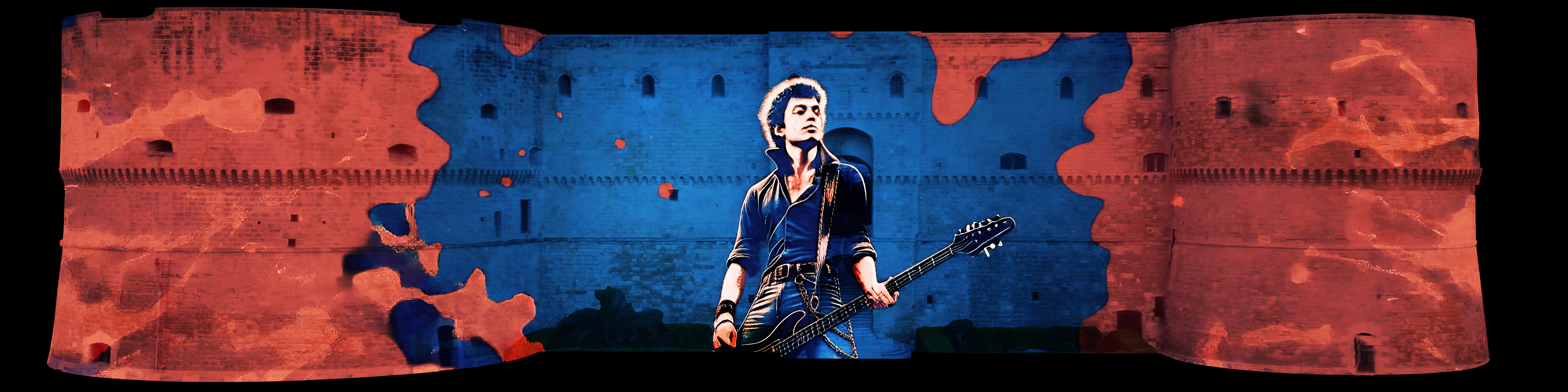
The show celebrates fifty years of punk rock by following the journey of a rebellious culture that began in basements, clubs, garages, dirty streets, xeroxed fanzines, and torn posters, then crossed the ocean, entered the record industry, reached television, and finally became a shared language of global pop culture.
This is the contradiction we wanted to put in front of the audience: punk was born to attack the mechanisms of mass culture, but ended up becoming one of its founding chapters.
In 2026, punk turns fifty. In 1976, the Ramones released Blitzkrieg Bop, recorded in seven days on a minimal budget. A few months later, the Sex Pistols sent Anarchy in the UK into circulation, transforming frustration into a public explosion. In January 1977, The Clash signed with CBS, a move that some people in the scene already read as betrayal.
Half a century later, punk is everywhere: on teenagers' t-shirts, in fashion archives, in film trailers, in sports arenas, in commercials, in videogames, and in the visual memory of people who were born long after the original bands had disappeared.
We did not want to tell this story as a nostalgic search for lost purity. We also did not want to reduce it to a moral judgment on commercialization.
Punk did not simply die. It changed state.
It moved from revolution to diffused aesthetic, from subculture to critical attitude, from an urgent cry to a grammar that the mainstream could not stop absorbing.
As always with Medimex, the music is not a background element. It is the structure of the show. Directed by the selection of the Medimex Artistic Director Cesare Veronico, the soundtrack was built to follow the transformation of punk across five decades.
The full sequence lasts 6 minutes and 24 seconds. It moves from the first chant of New York punk to the glossy acceleration of pop-punk, following a line that is musical, political, visual, and cultural at the same time.
The Aragonese Castle becomes a social seismograph.
Its facade records the shockwave of punk across five decades: from collective movement to individual isolation, from political provocation to media anxiety, from DIY urgency to commodified memory.
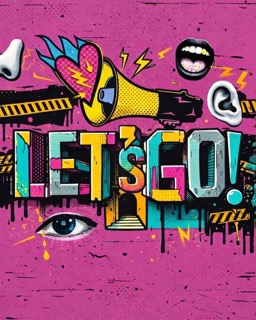
The title is not accidental. The Ramones' chant, born in the grime of the New York underground and now familiar in stadiums, commercials, games, and public events, is the perfect synthesis of the paradox we wanted to explore.
Hey Ho! Let's Go! is a visual reflection on a rebellious aesthetic that survived by becoming what it once opposed.
The first act begins with the most direct possible gesture: words.
HEY, HO, LET'S GO jump out of the Castle with a stop-motion feeling. The letters slip, stutter, misregister, and change from black and white into pink, black, white, and aggressive xerox texture as the instruments enter one by one.
The animation looks handmade: torn paper, hard shadows, registration mistakes, dry cuts, and sudden blocks of color. Each new musical layer adds more visual noise to the facade.
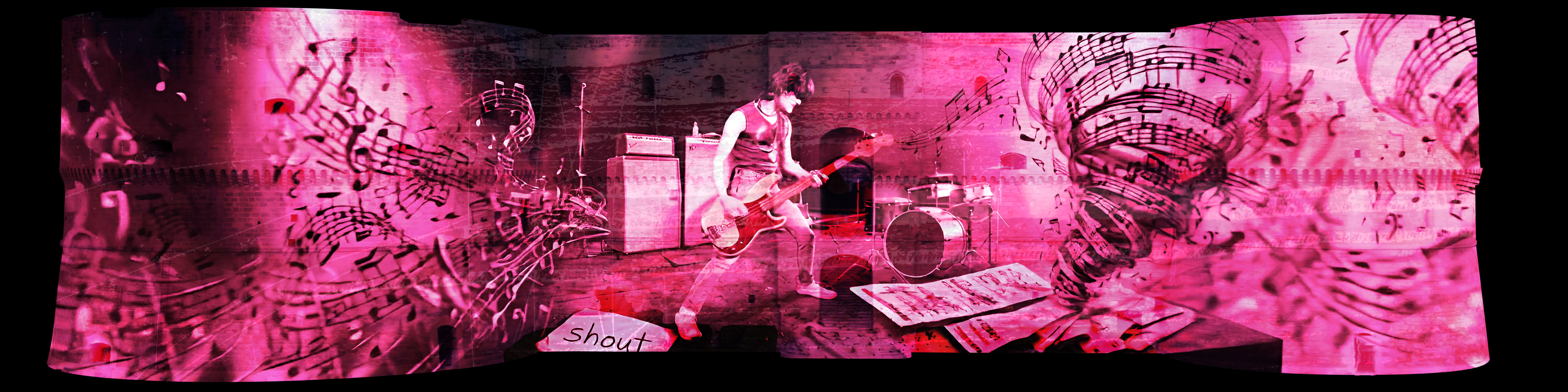
The Castle then becomes a seismograph. A measured paper roll moves from one tower to the other, drawing the amplitude of the song in real time. The line reacts to the Ramones like an incoming earthquake.
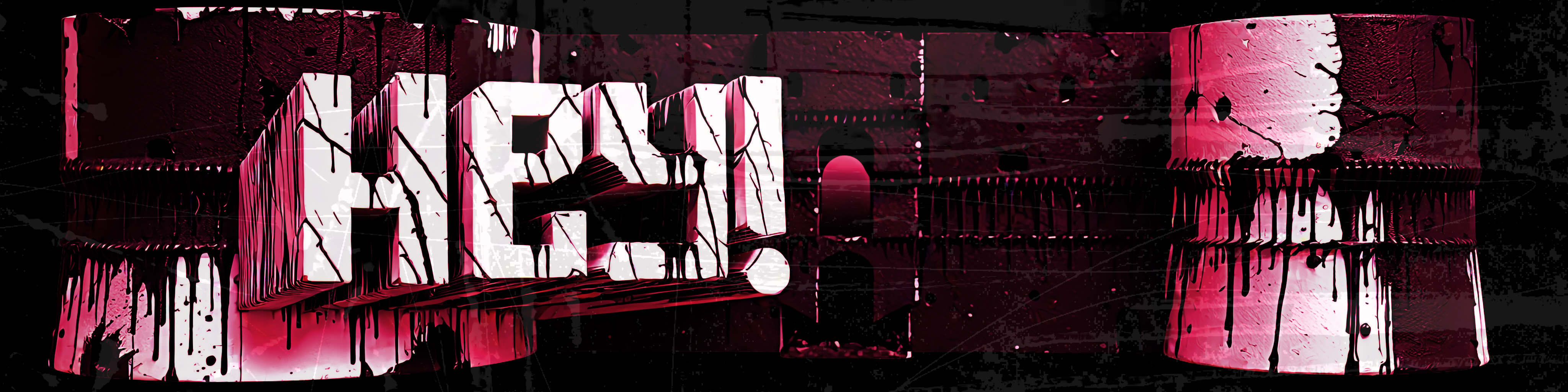
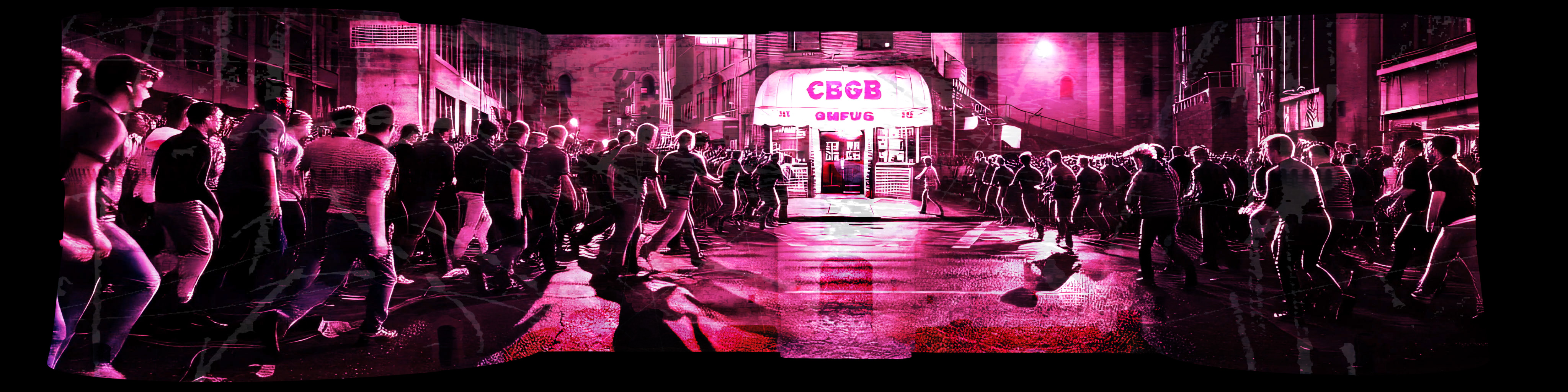
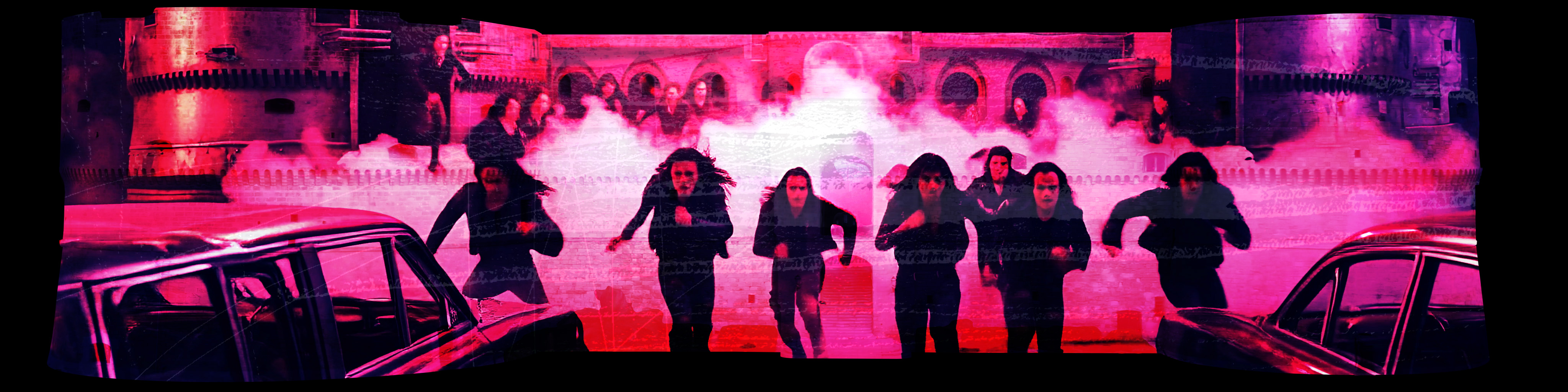
From that vibration, the show moves to the CBGB. The crowd arrives like a small assault. The kids pile toward the club, the bodies press into the entrance, and the song becomes what it always was at the deepest level: a rush toward a concert.
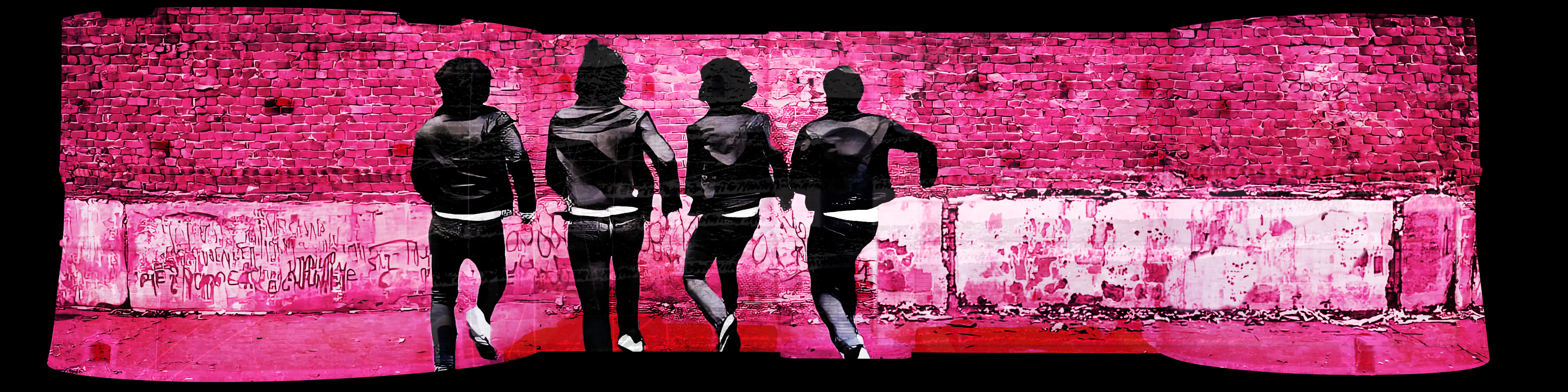
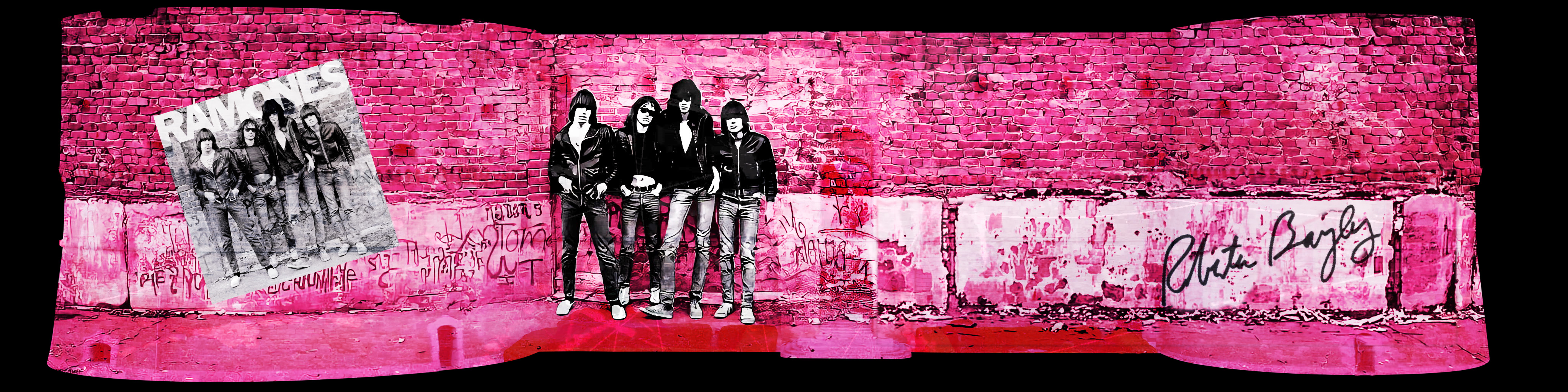
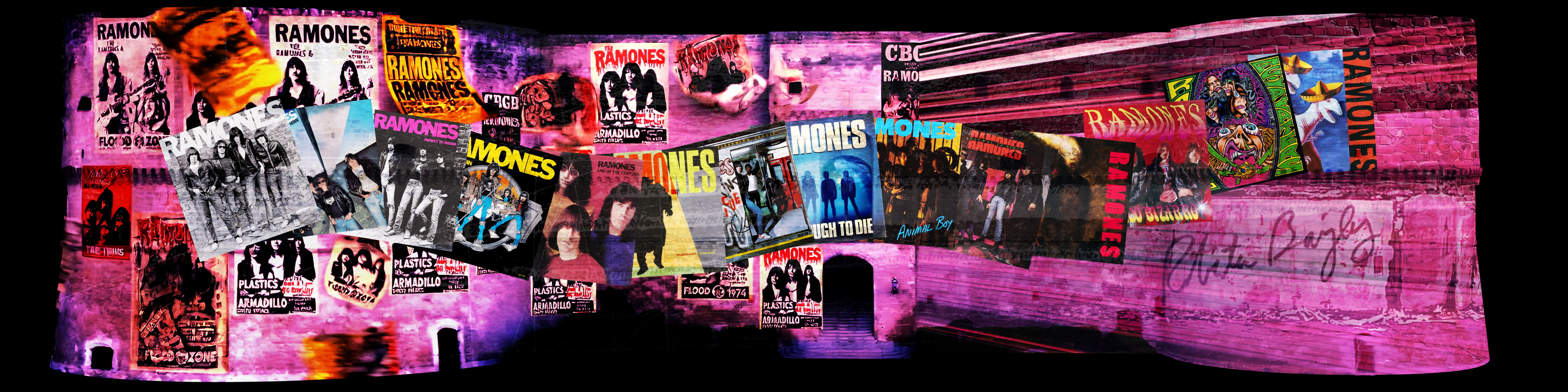
The Ramones appear against a rough wall, echoing Roberta Bayley's iconic photograph for the first album cover. A simple pose becomes an image that can be copied, printed, stamped, and repeated until it turns into a global sign.
The facade is invaded by album covers, flyers, CBGB posters, photocopies, xerographies, cheap ink, and improvised collage. Punk begins as infrastructure made with almost nothing: paper, urgency, repetition, and a few chords played with absolute conviction.
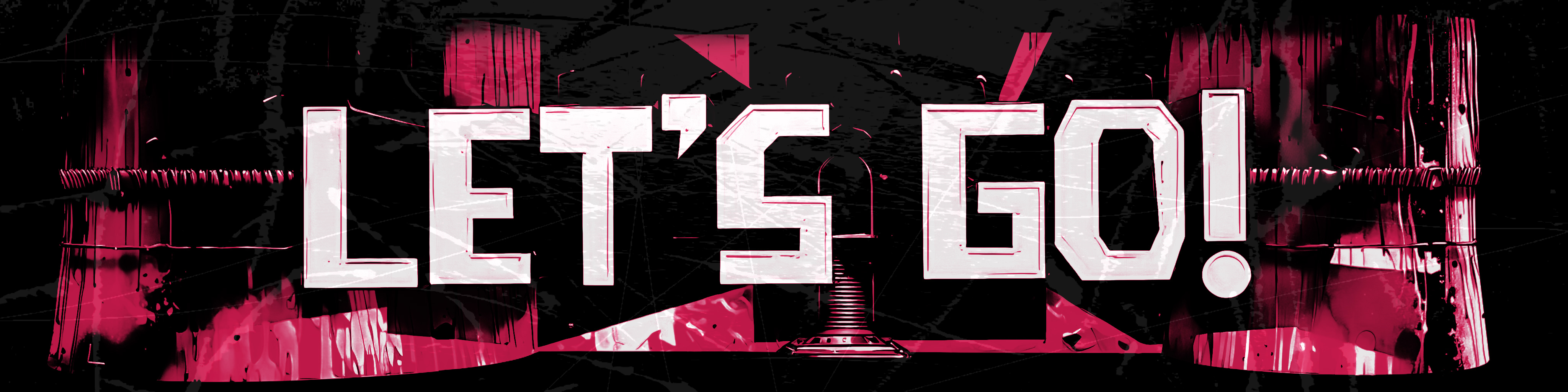
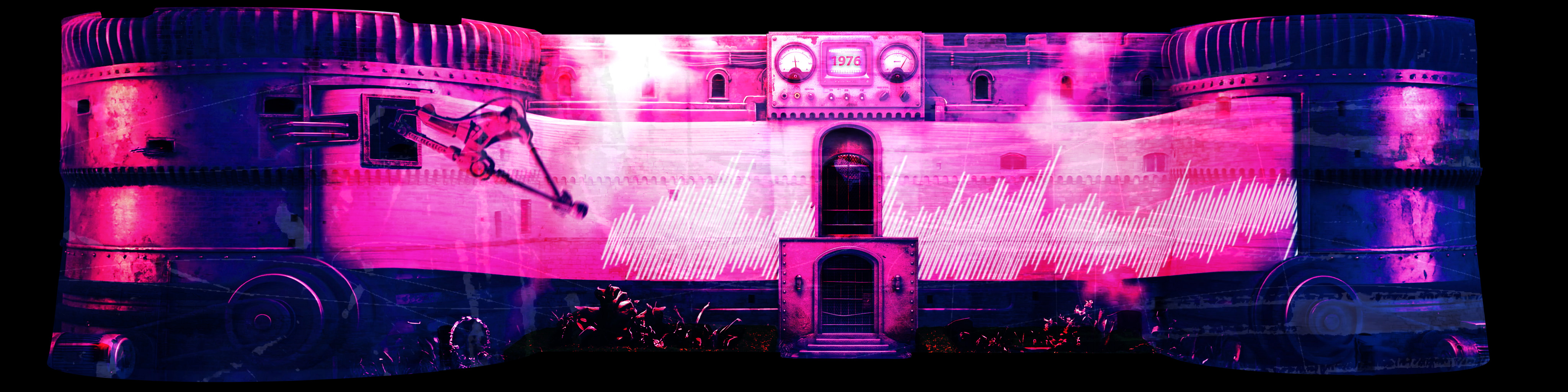
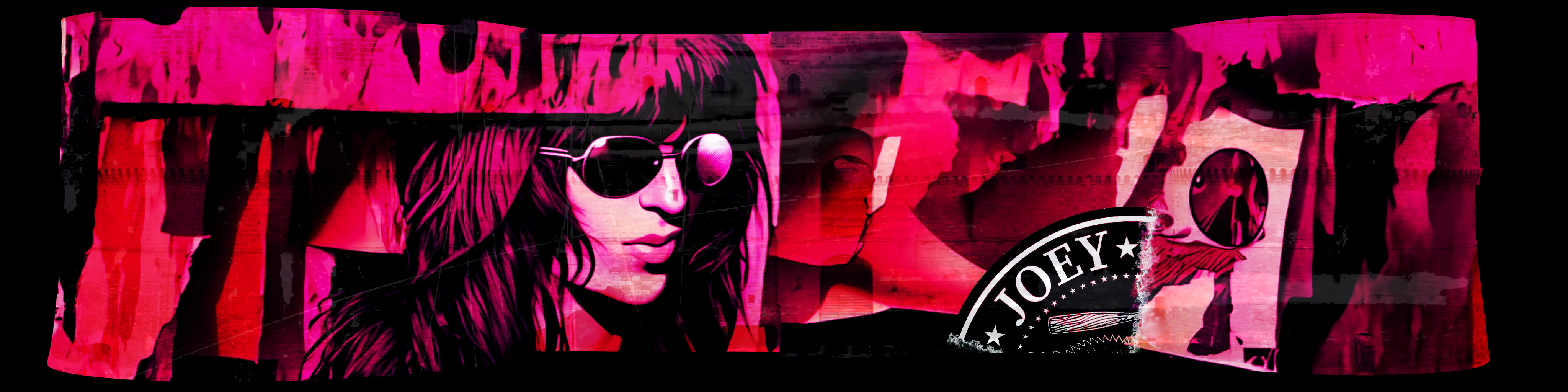
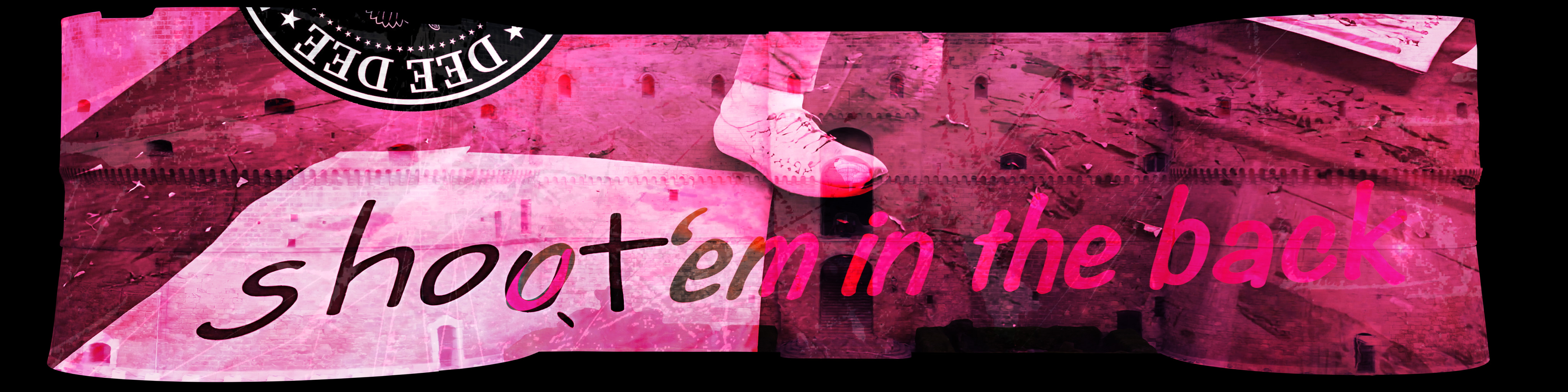
Dee Dee Ramone enters as the detonator. The lyric is corrected by hand, rough and visible. A line changes shape and becomes more tense, darker, more dangerous, more Ramones.
The paper roll is eventually torn open by the same bodies it was trying to measure. The social earthquake leaves the graph and enters the street.
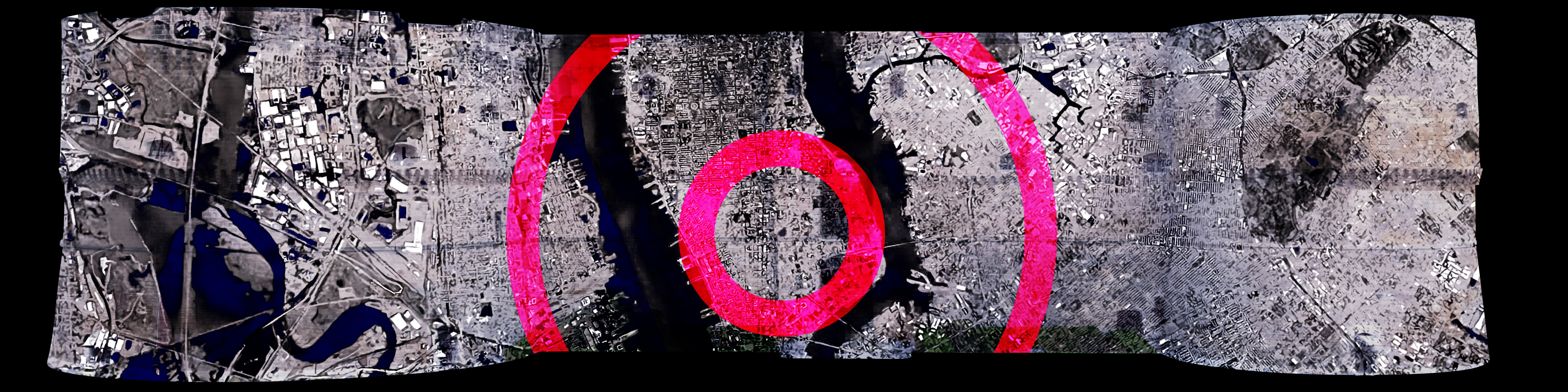
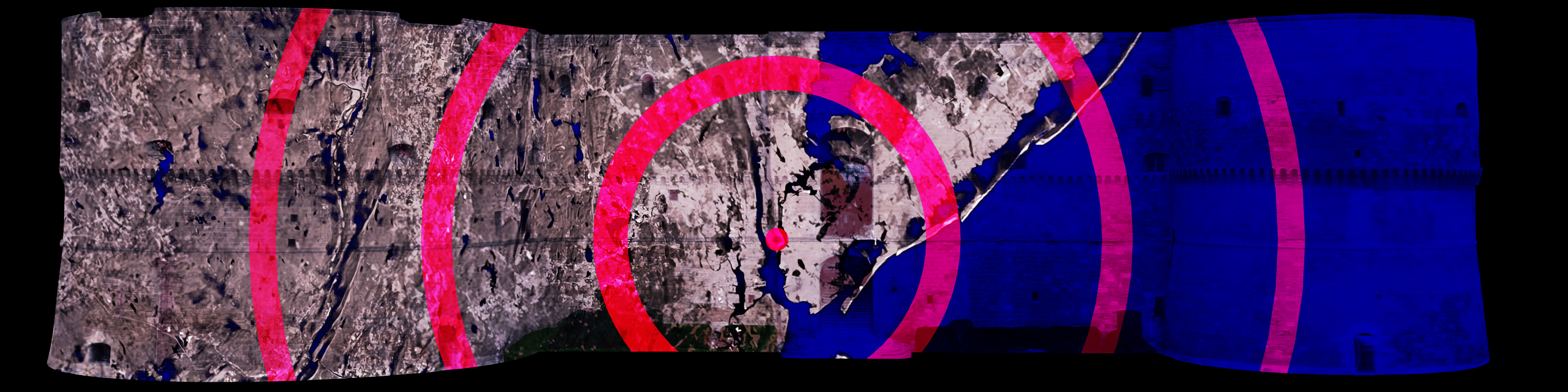
On the last push of the Ramones, the map opens from 315 Bowery, Manhattan. The punk signal leaves New York as a shockwave, crosses the Atlantic, and reaches London.
London is already vibrating on another frequency: dirtier, more theatrical, more political, more poisonous.
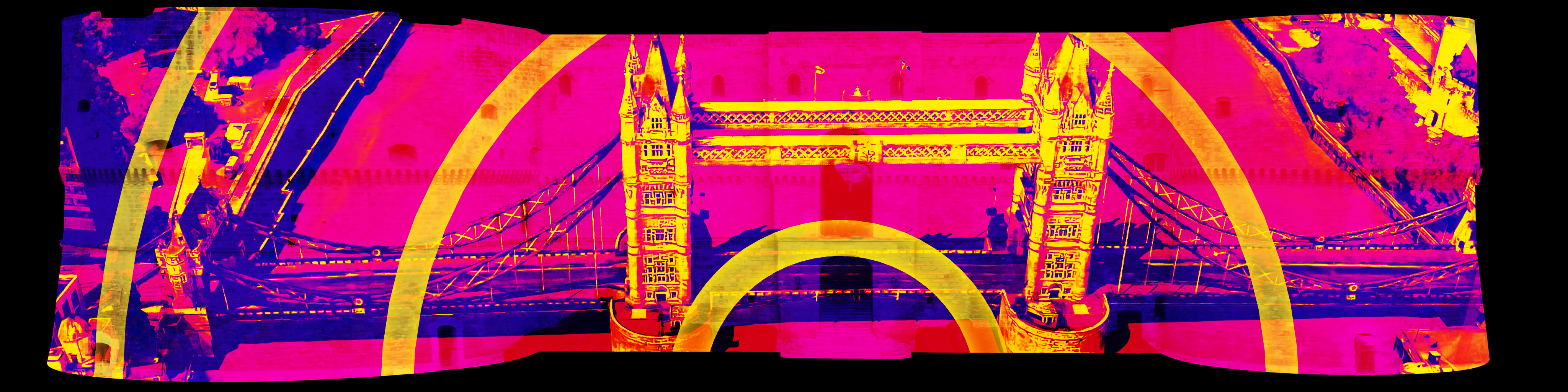
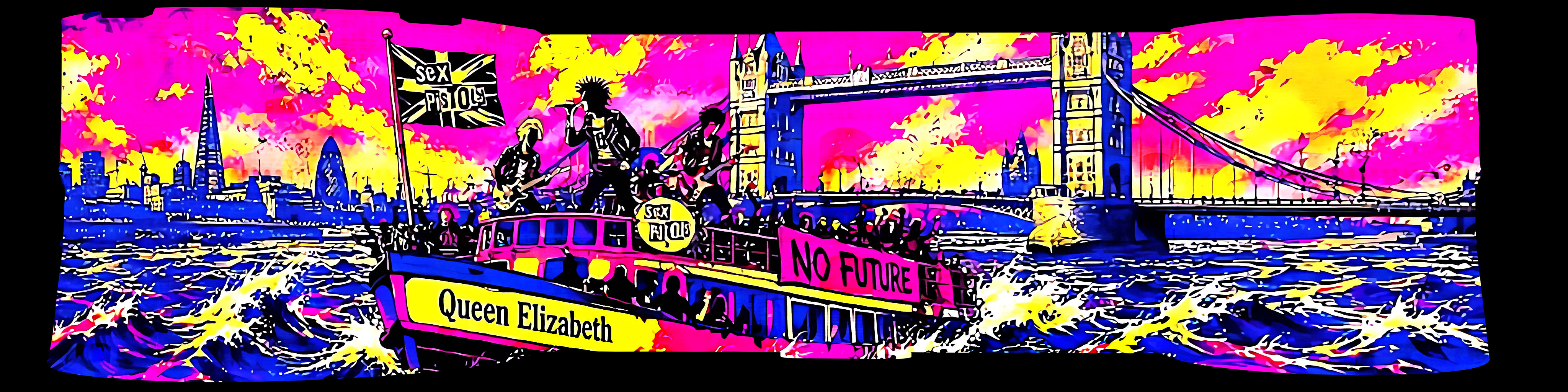
The Sex Pistols enter through the 1977 Silver Jubilee riverboat performance organized by Malcolm McLaren. The boat Queen Elizabeth moves on the Thames with Westminster behind it, turning the official ceremony into a public wound.
The Union Jack covers the Castle like a heavy cloth. It is not a clean national emblem; it is stretched, torn, pinned, and repaired. Safety pins become sutures. The graphic world of Jamie Reid attacks the official image of the monarchy with ransom-note lettering, collage, censorship, and scandal.
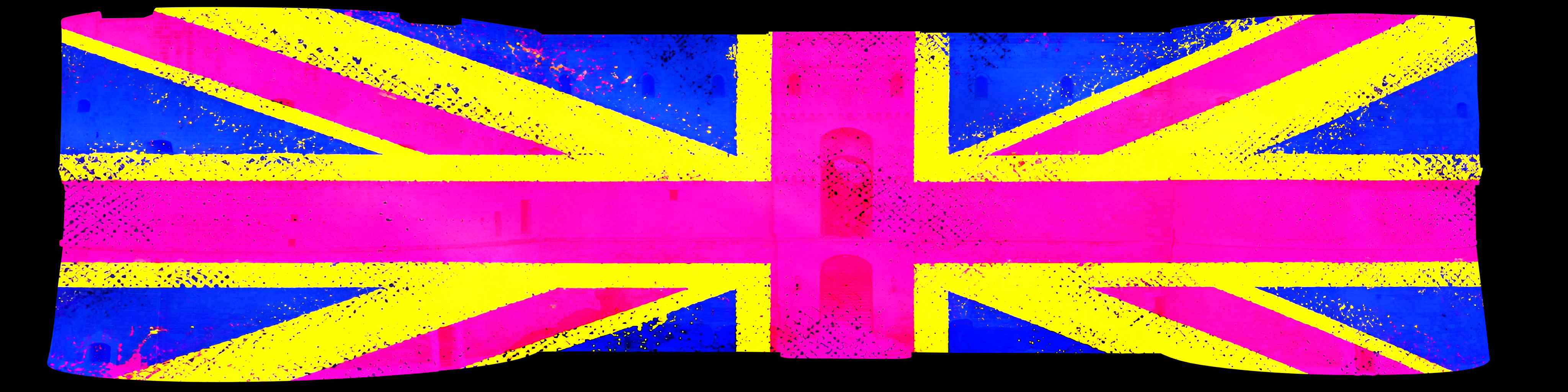
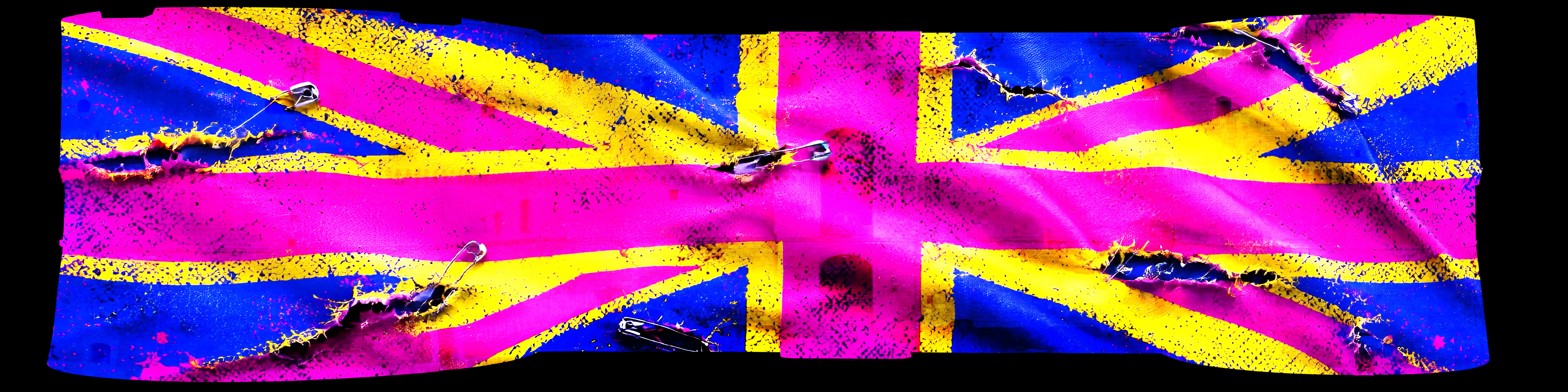
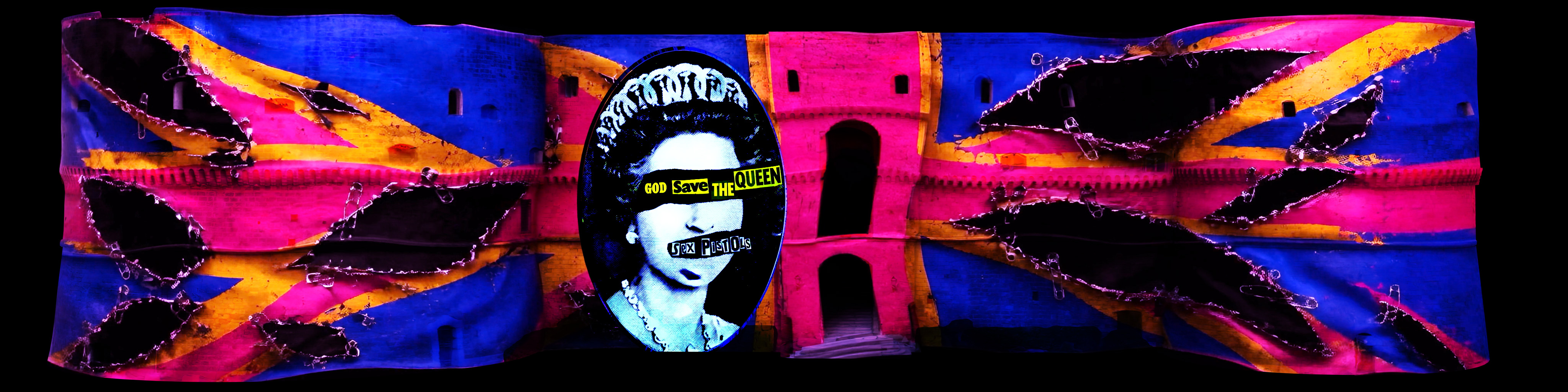
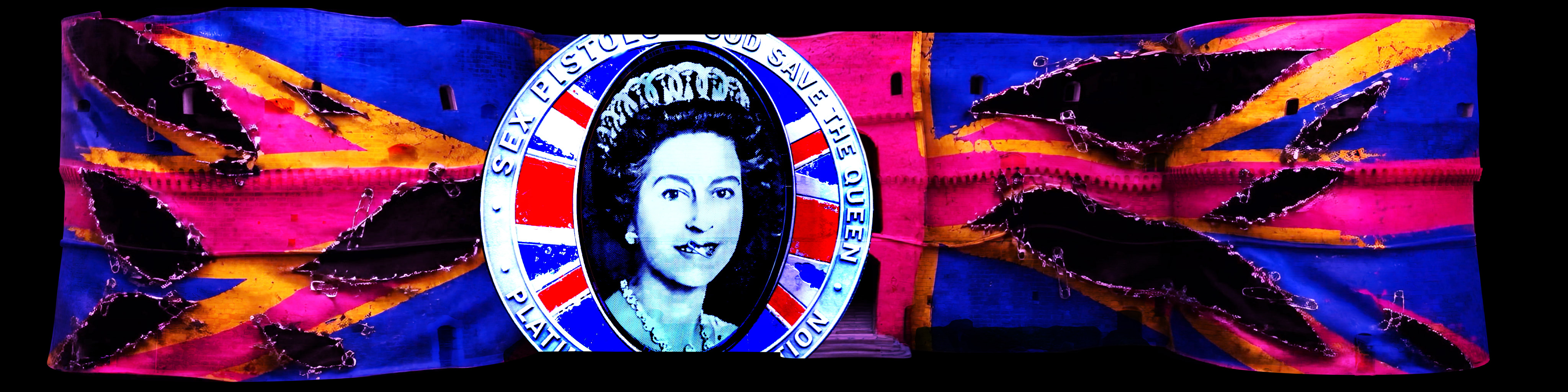
The Queen's face emerges from the Castle like a state emblem, then becomes cover art, poster, censorship, and finally a commemorative coin.
This is the first major transformation in the show: provocation becomes object. Scandal becomes souvenir. The image that attacked the system is polished, minted, handled, archived, and sold.
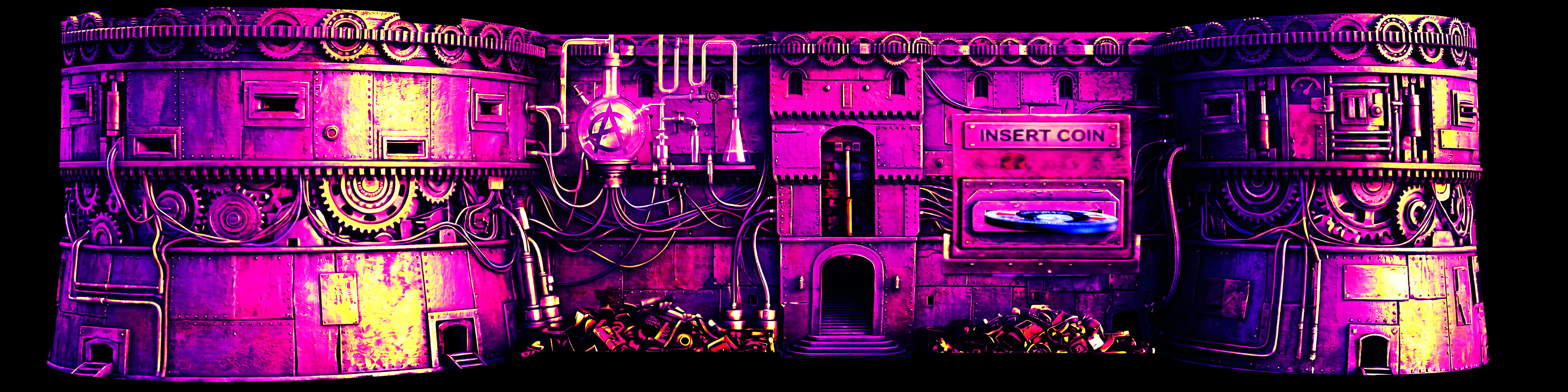
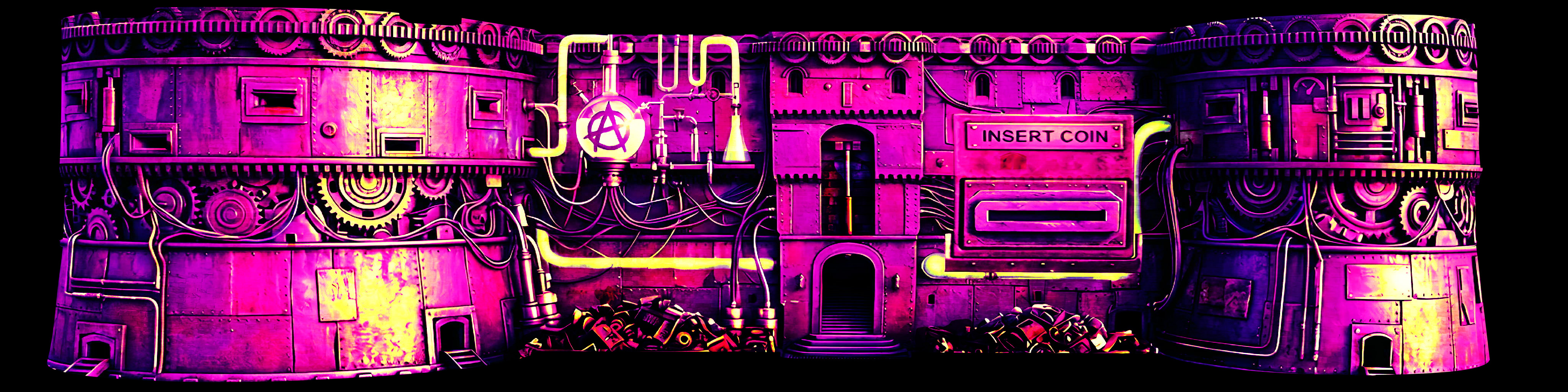
The Castle opens and reveals the system underneath: tubes, valves, gears, cables, panels, and an INSERT COIN slot. The coin disappears into the mechanism. Punk enters the machine as currency, but the machine cannot digest it cleanly.
Green liquid begins to move through the tubes and reaches an ampoule marked with the anarchic A. It pulses like a hidden organ. The machine that tried to absorb punk fills with its own poison.
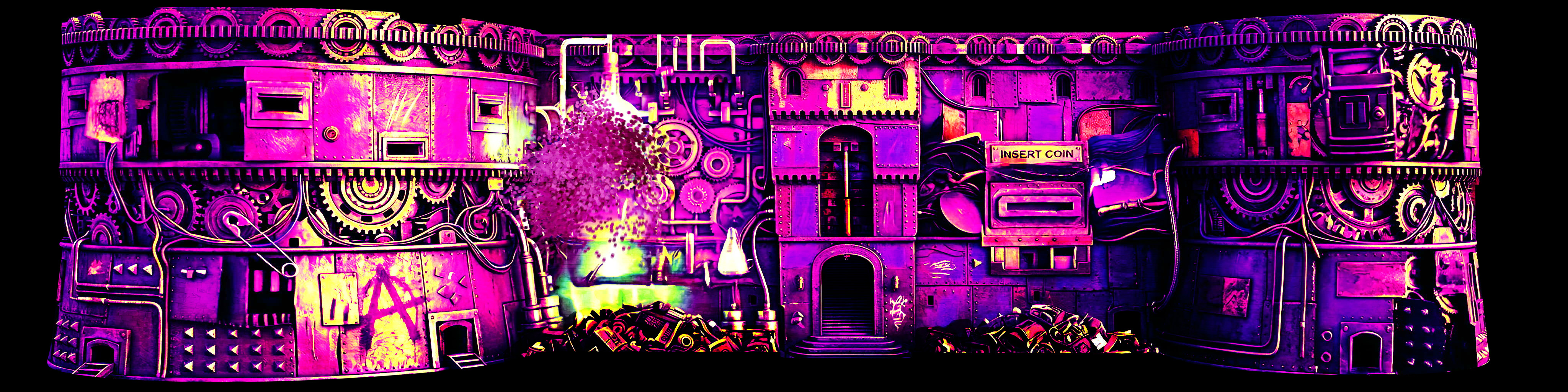
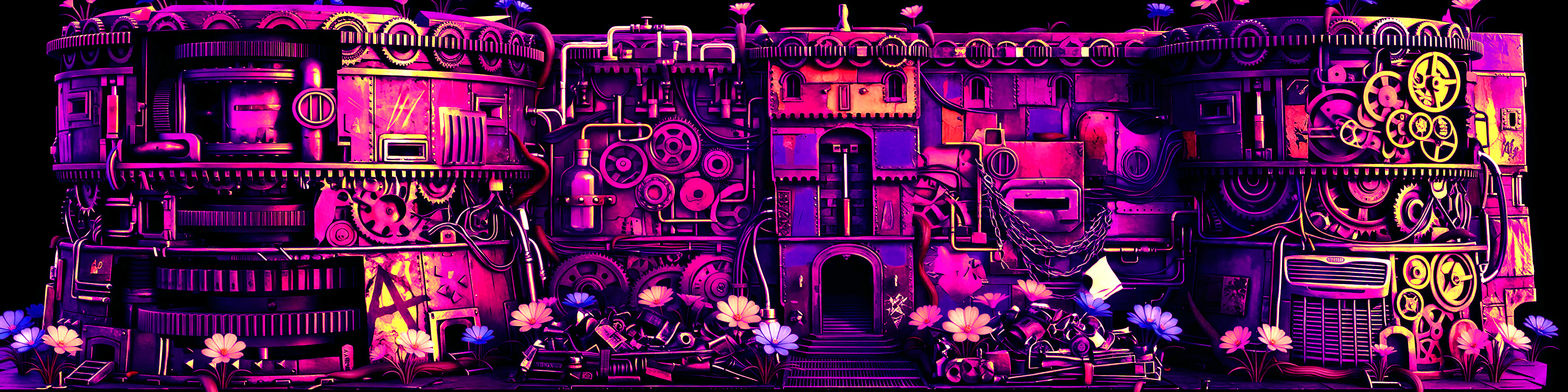
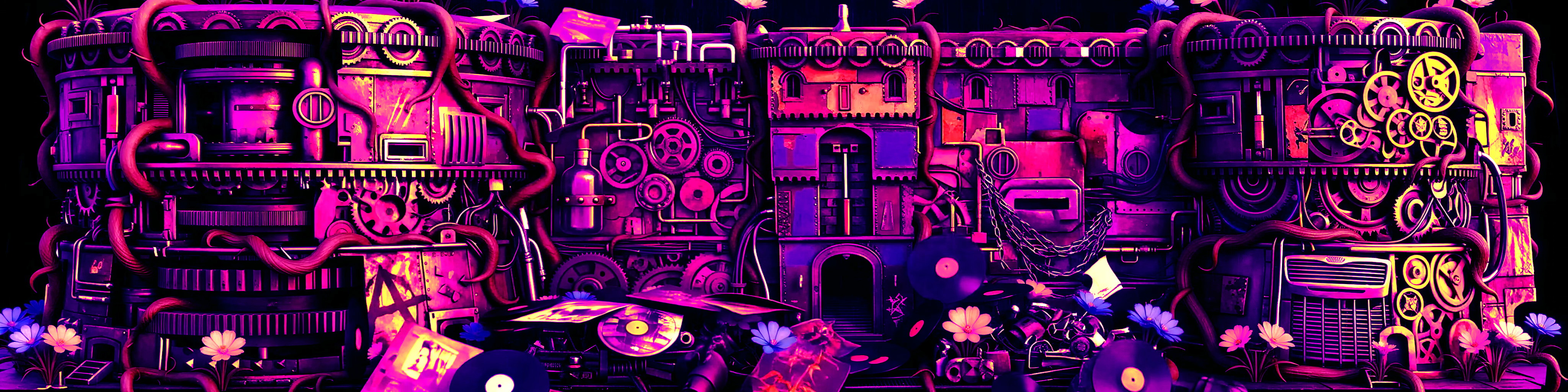
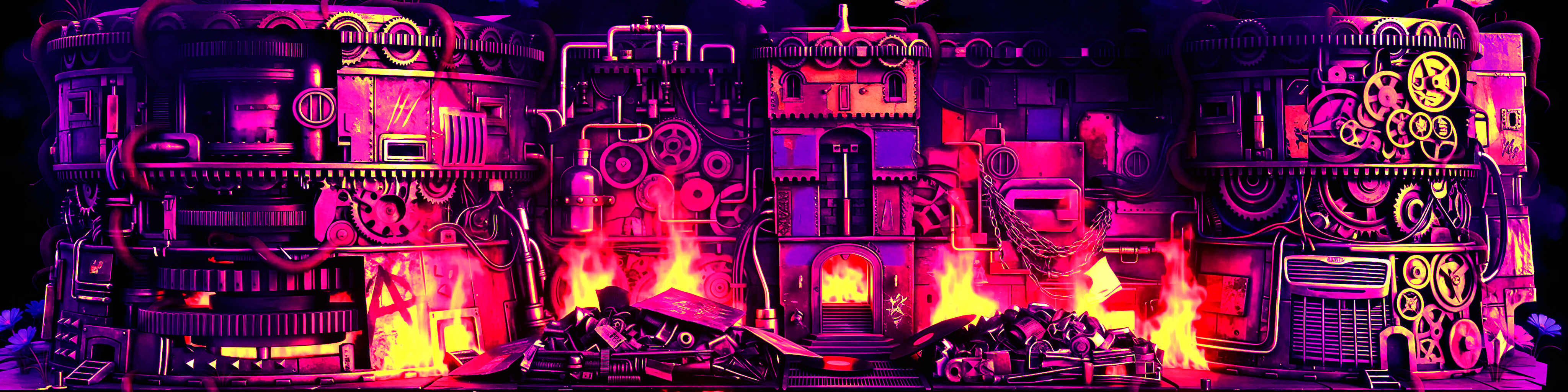
The mechanism explodes. Flowers grow through the machinery. Punk memorabilia appears as museum relics, then burns in a reference to Joe Corre's 2016 protest against the official celebration and commercialization of punk.
For a moment, the Castle becomes a mechanical altar covered in wrong flowers, fire, dust, and damaged symbols.
The explosion closes with a zipper across the facade.
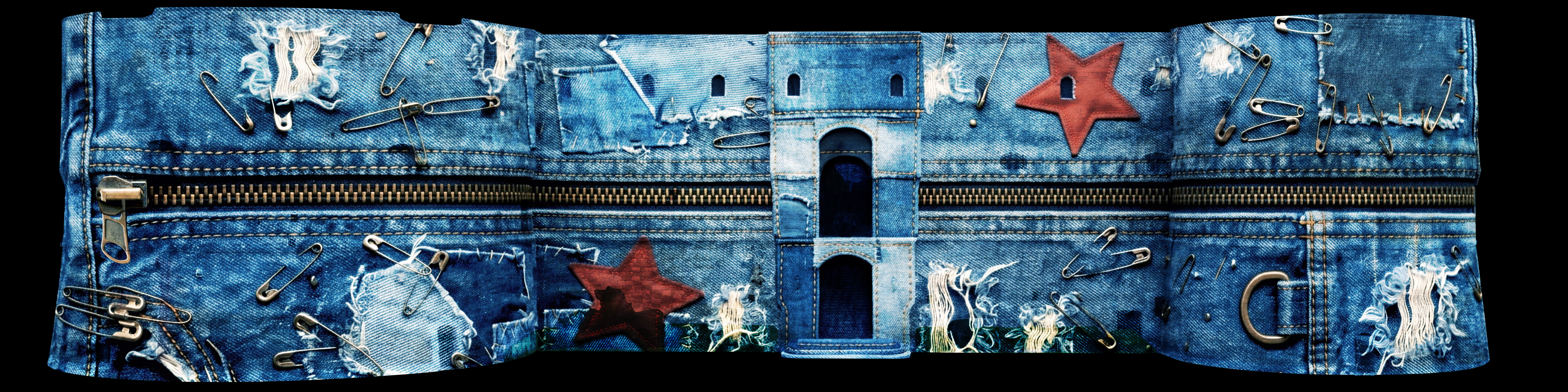
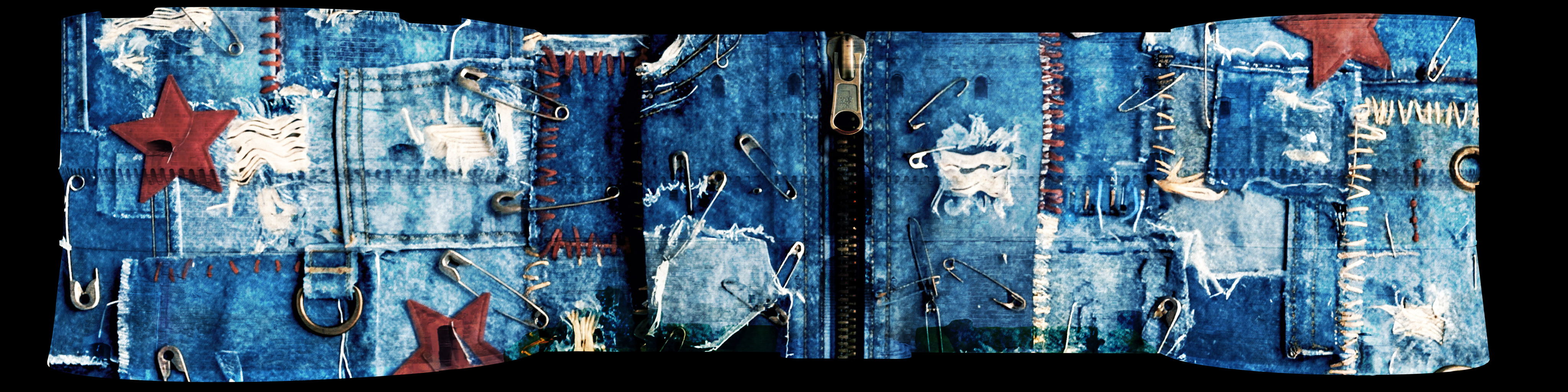
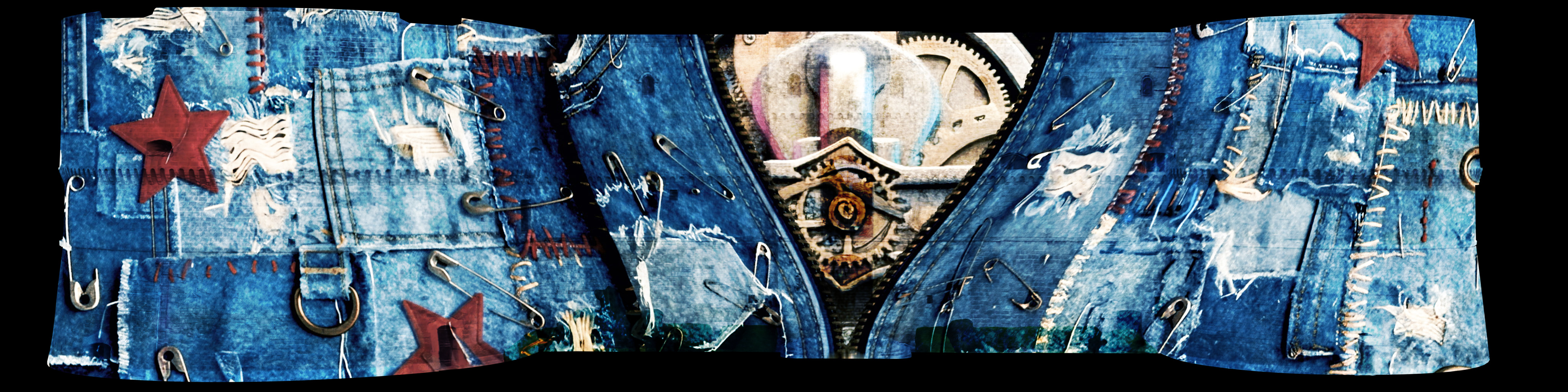
Denim, stitches, safety pins, red stars, patches, and worn fabric cover the Castle. The image immediately carries a second meaning: this is not only clothing, it is a threshold between underground identity and the marketplace.
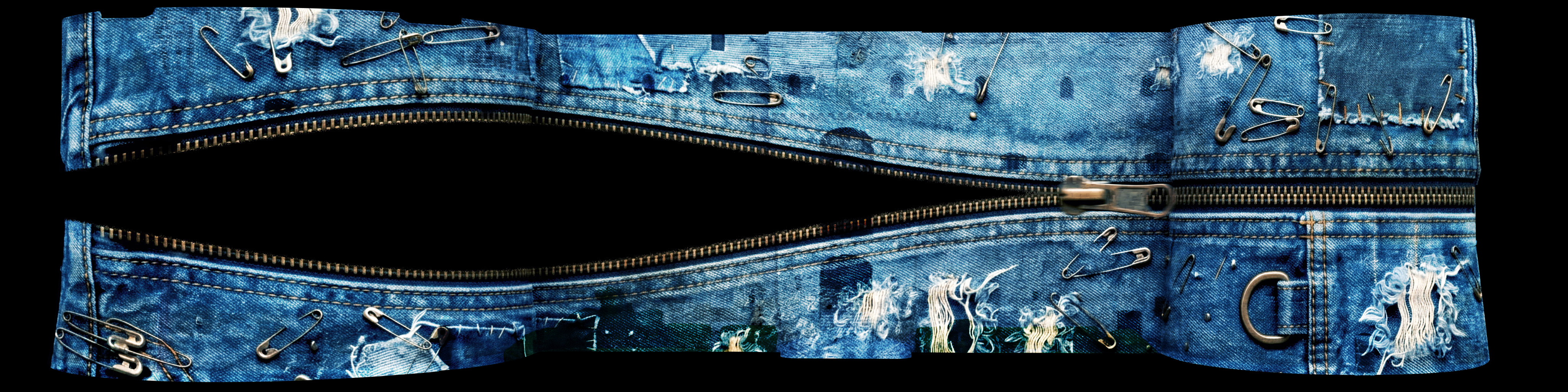
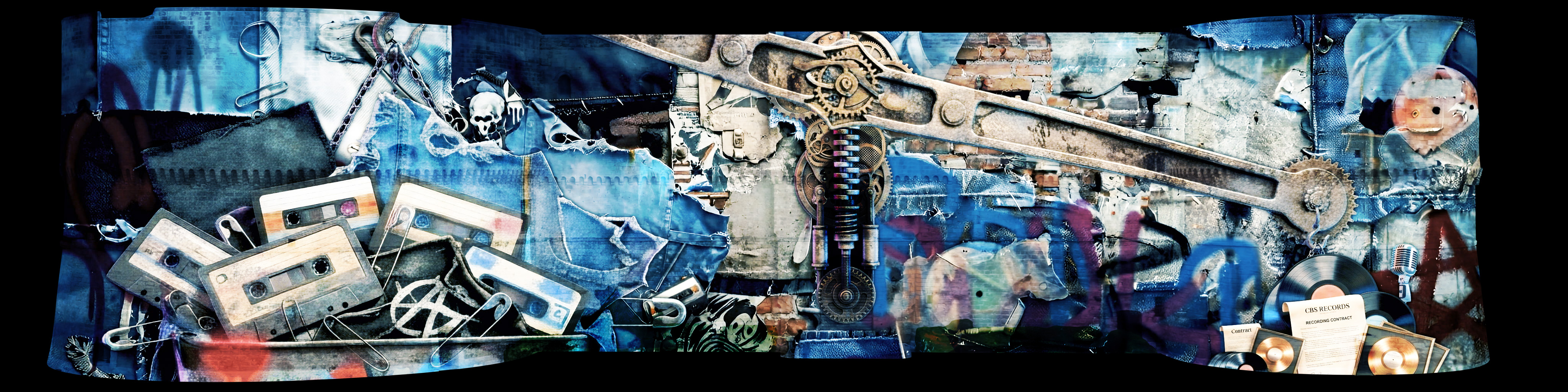
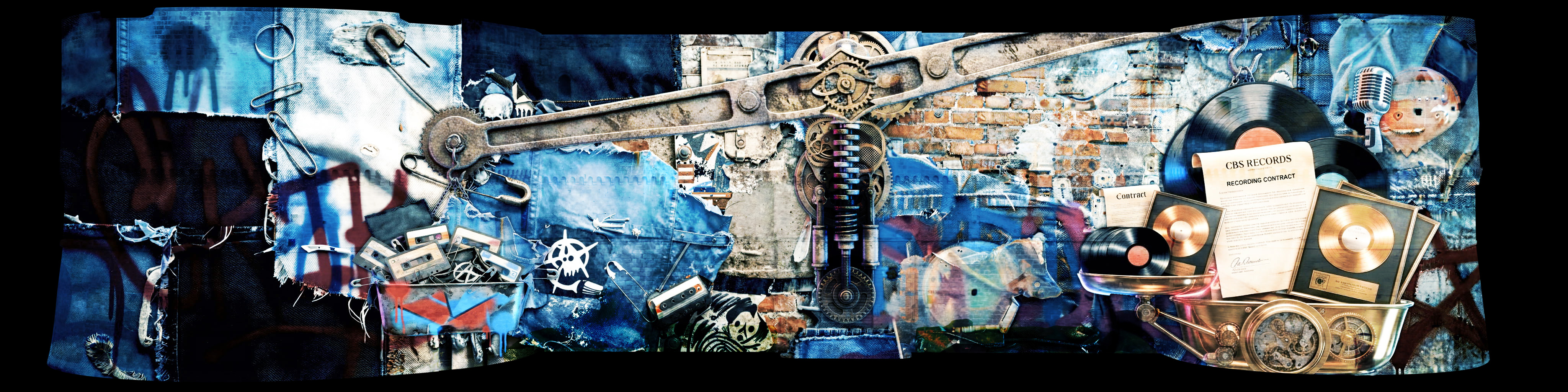
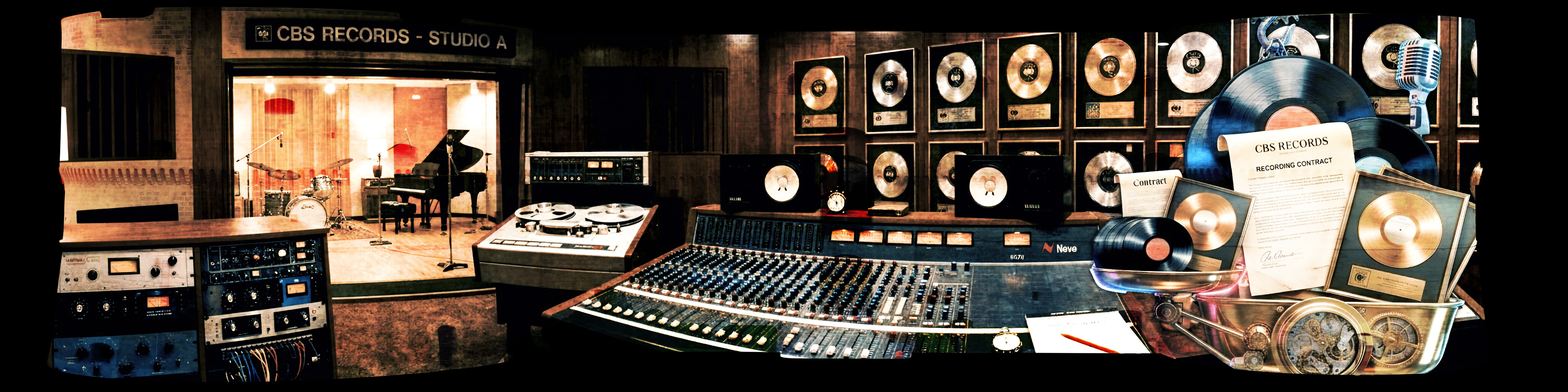
The zipper opens and reveals a mechanical scale. On one side, old punk: cassettes, leather, torn denim, fanzines, anarchic symbols, skulls, recovered fabrics. On the other side, CBS: contract, vinyl, studio microphone, gold records, distribution, production, and access.
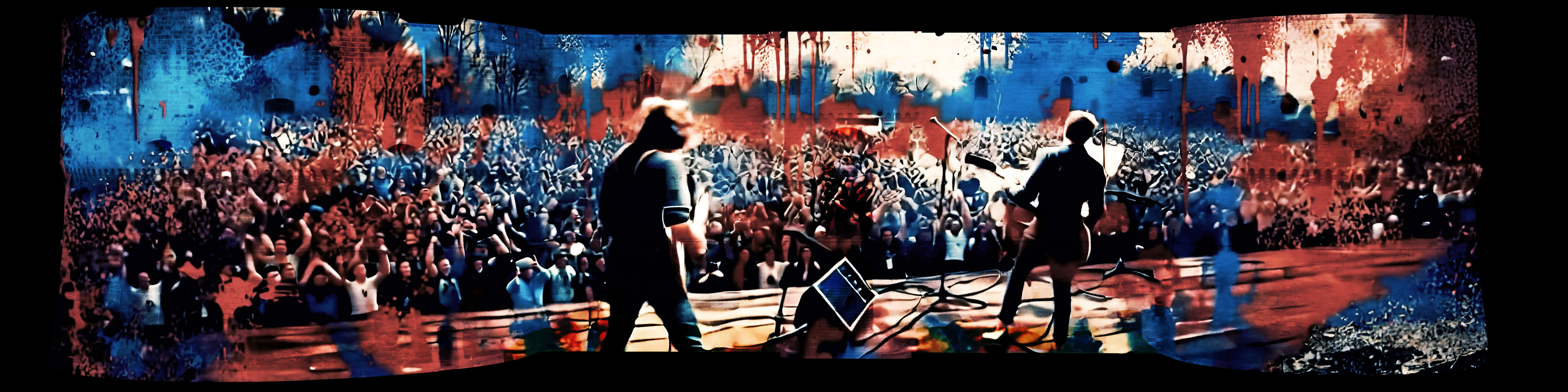
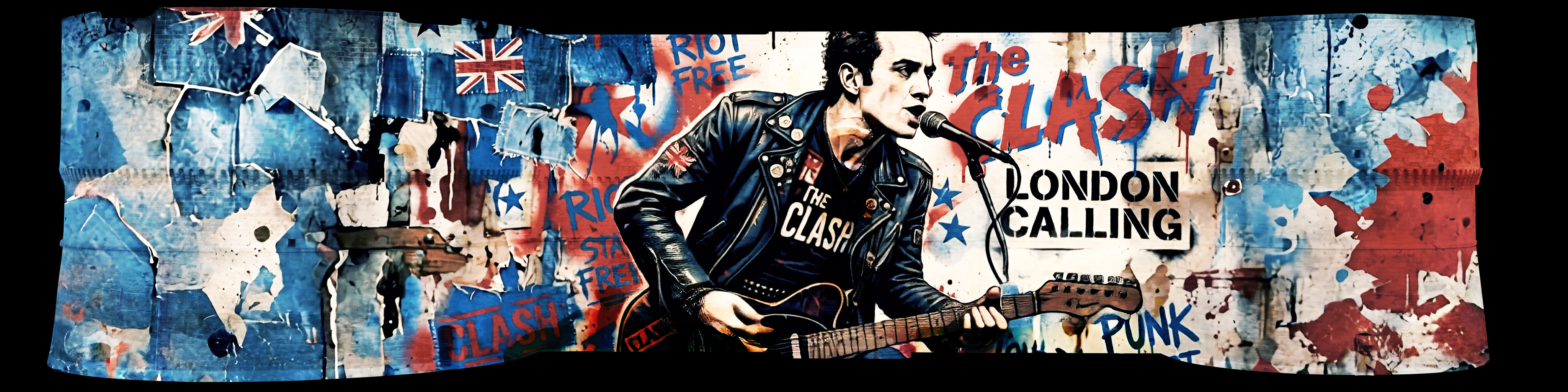
The question is not simplified. For The Clash, entering a larger structure was also a way to let the message travel farther: antifascism, class consciousness, minority rights, anger against injustice, and solidarity all needed more speakers, more walls, more radios.
The Castle becomes a recording studio. The punk passes from patch to tape, from flyer to master.
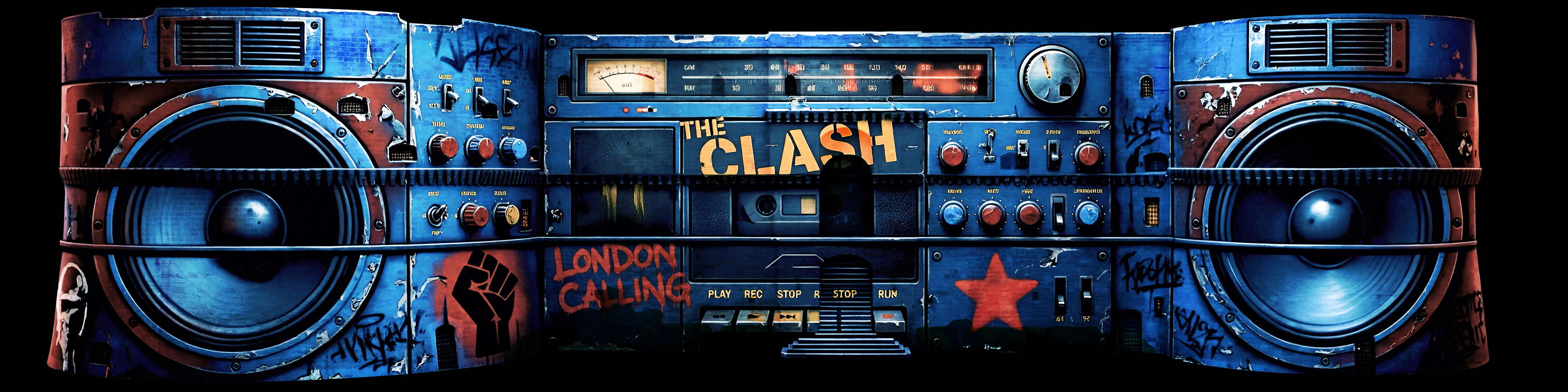
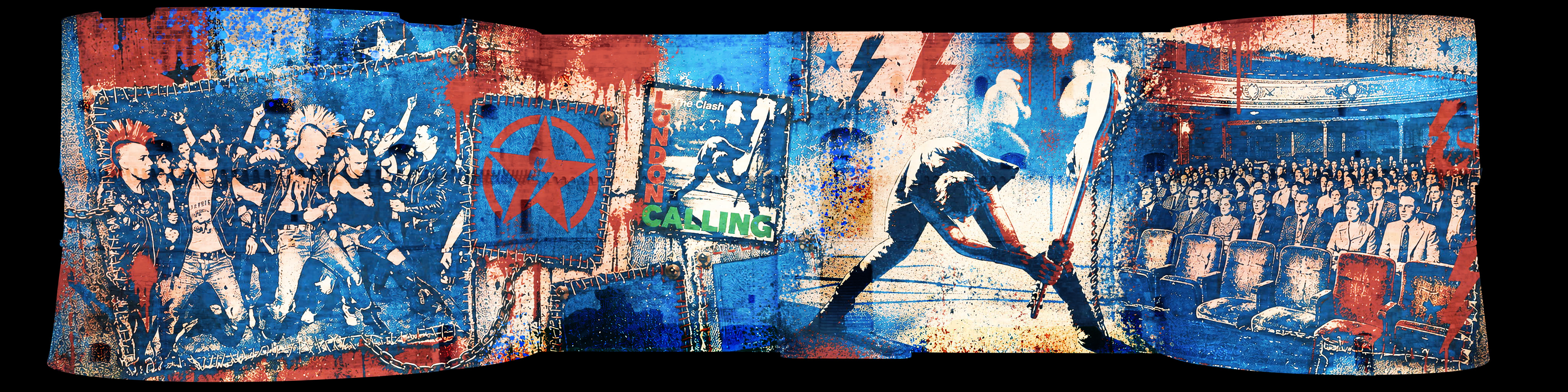
Then the boombox arrives: blue and red, scratched, covered in stickers, political signs, and the name The Clash. It carries the sound outside the studio and back into courtyards, sidewalks, neighborhoods, and hands.
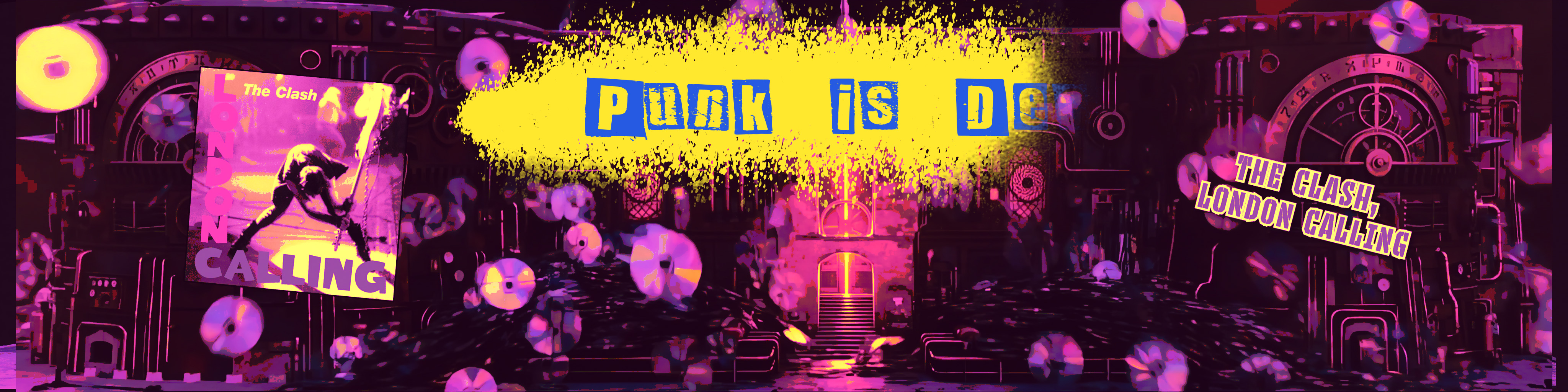
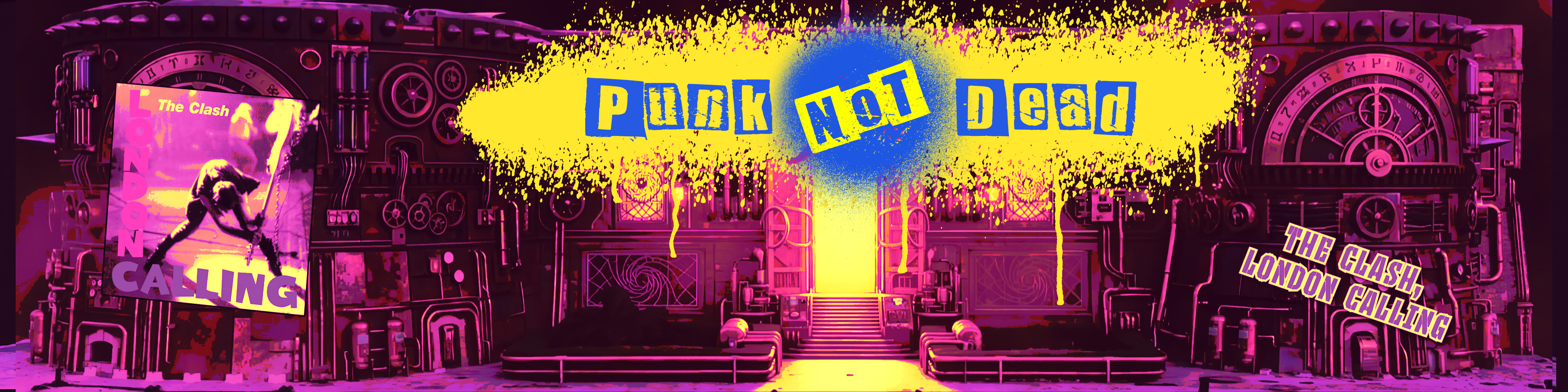
In the finale, everything converges on Paul Simonon smashing his bass, the gesture immortalized on the cover of London Calling after the 1979 Palladium concert in New York.
It becomes the symbol of a band that entered the industrial machine without giving up the conflict that made it necessary.
The fourth act brings punk into the era of screens, media panic, and post-9/11 political anxiety.
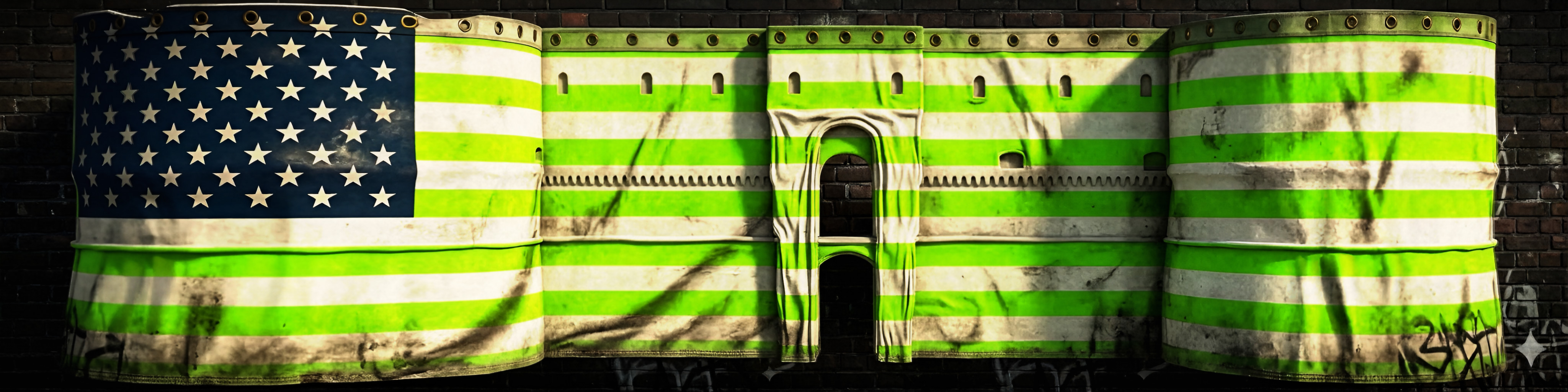
The American flag appears as a damaged signal. The red drains out, replaced by phosphor green, dirty white, and black shadows. The fabric shakes like an analog transmission on the edge of collapse.
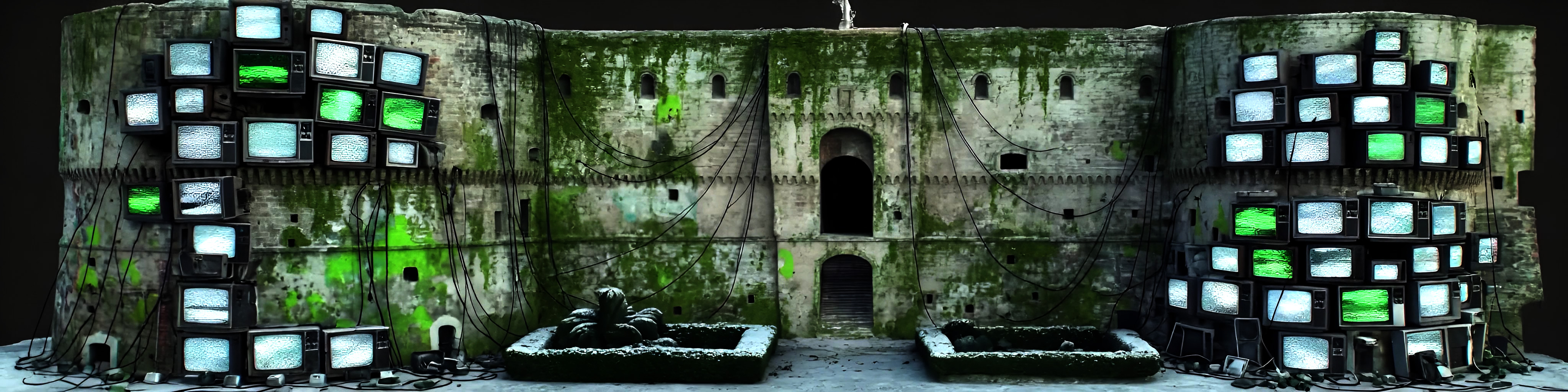
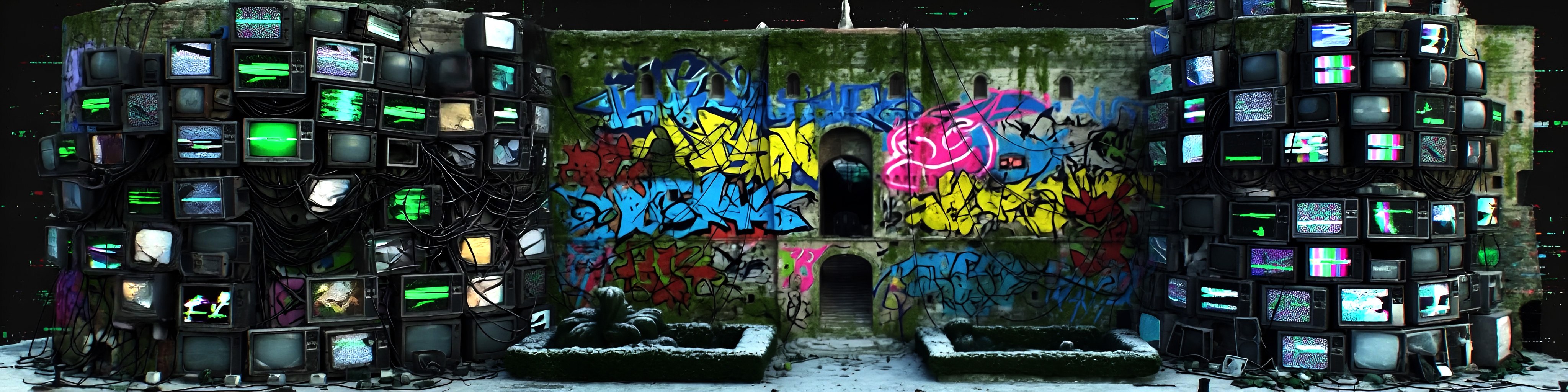
Two towers of CRT televisions take possession of the Castle. The screens are heavy, blue, green, almost dead, and tangled in cables. Television is no longer hanging on the wall; it has become the wall.
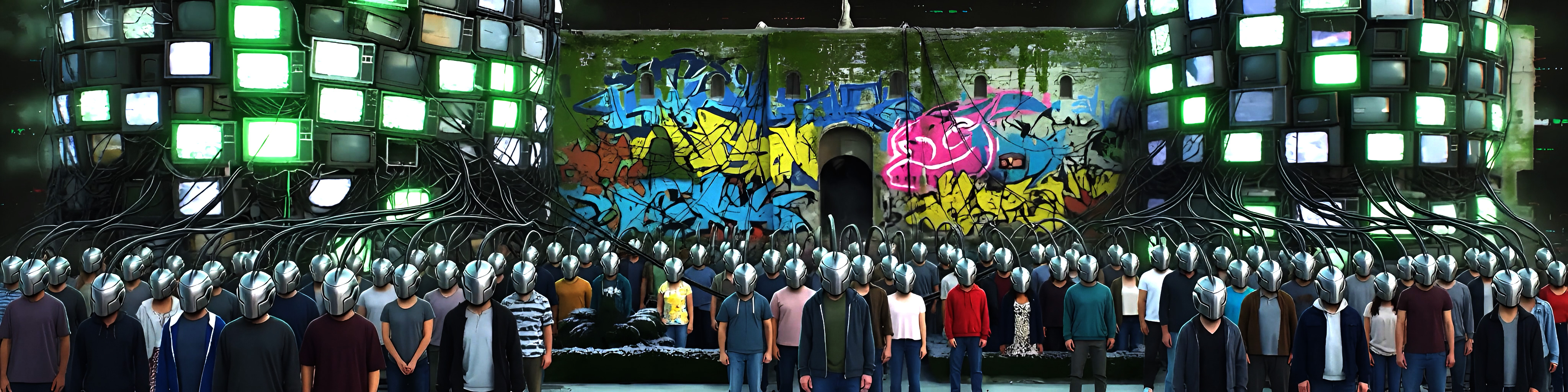
The crowd enters under the screens. Then the bodies begin to change. Human heads become monitors. Manipulation moves from the living room to the public square: everybody is together, everybody is lit by the same signal.
The concert erupts with smoke, red, black, and crossed lights. The heart-grenade appears as both emotional symbol and explosive device.
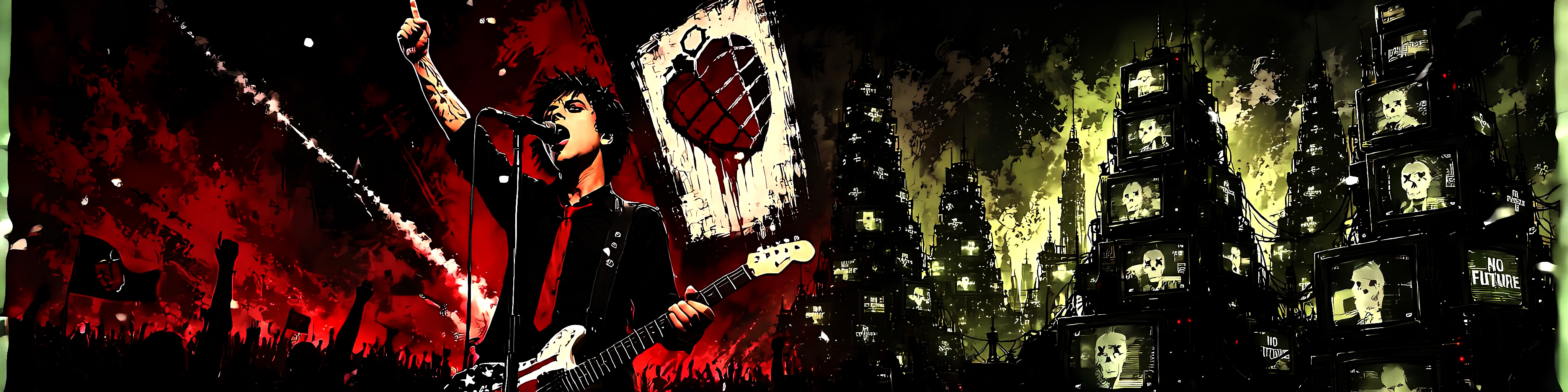
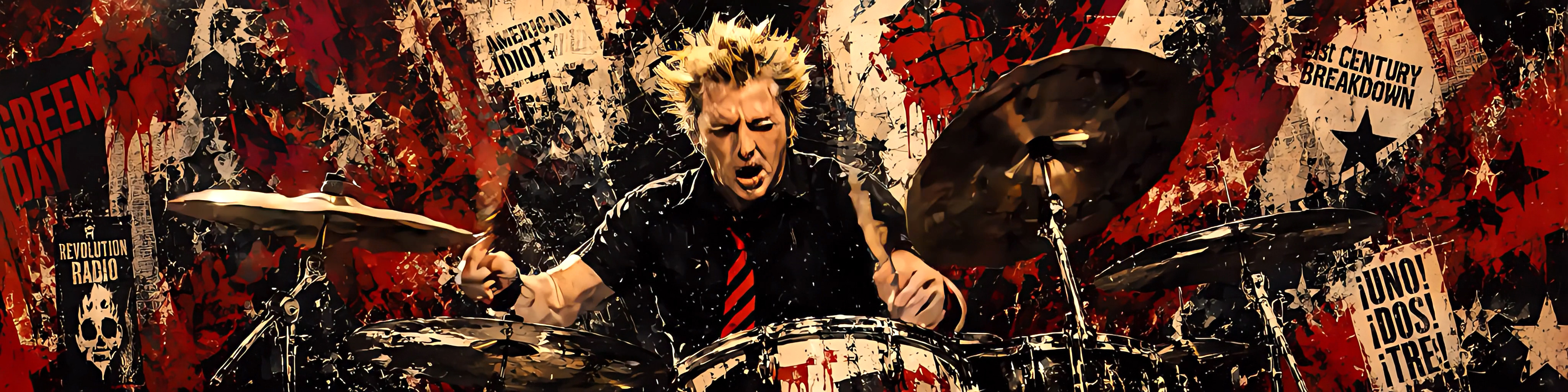
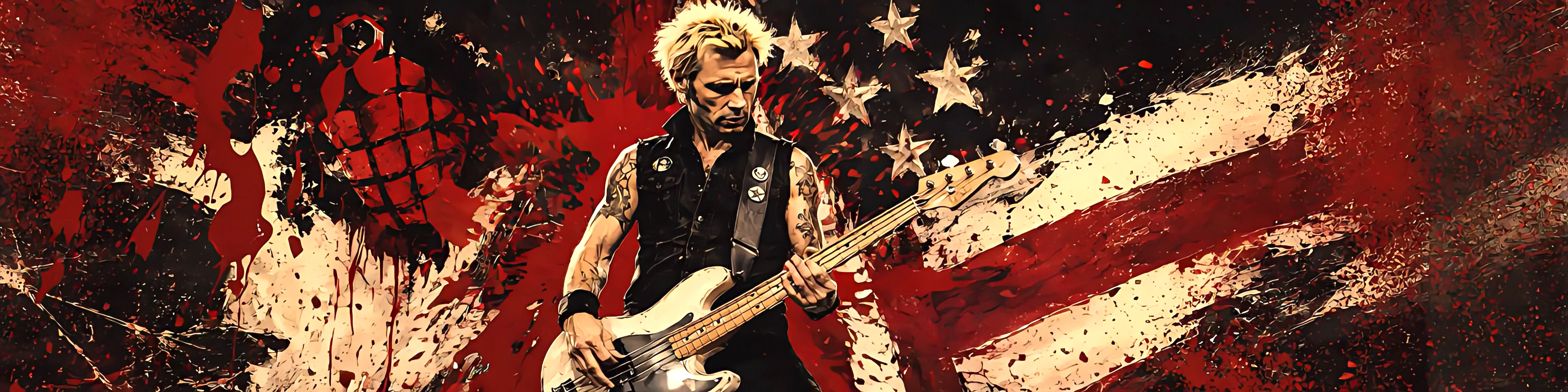
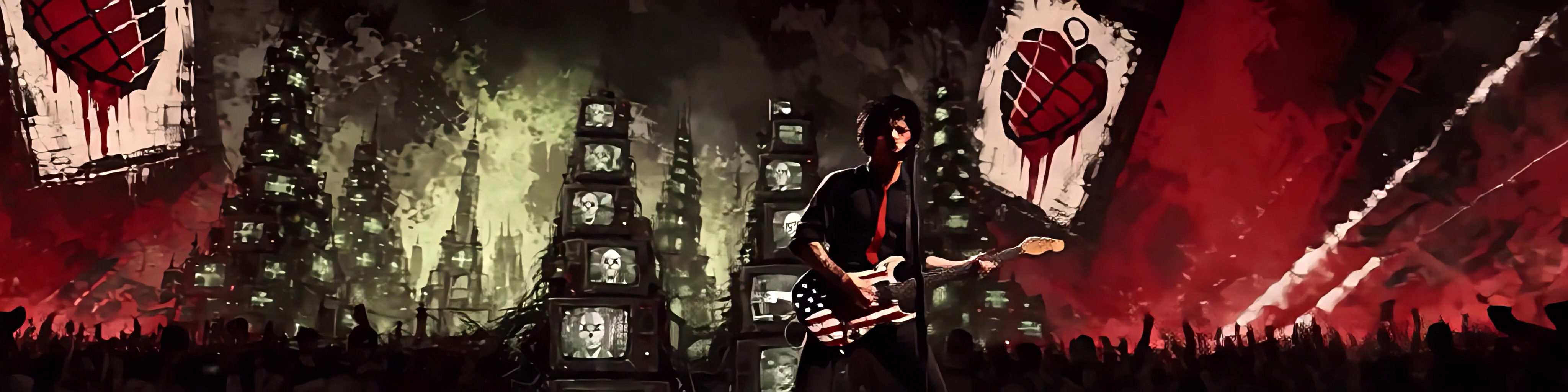
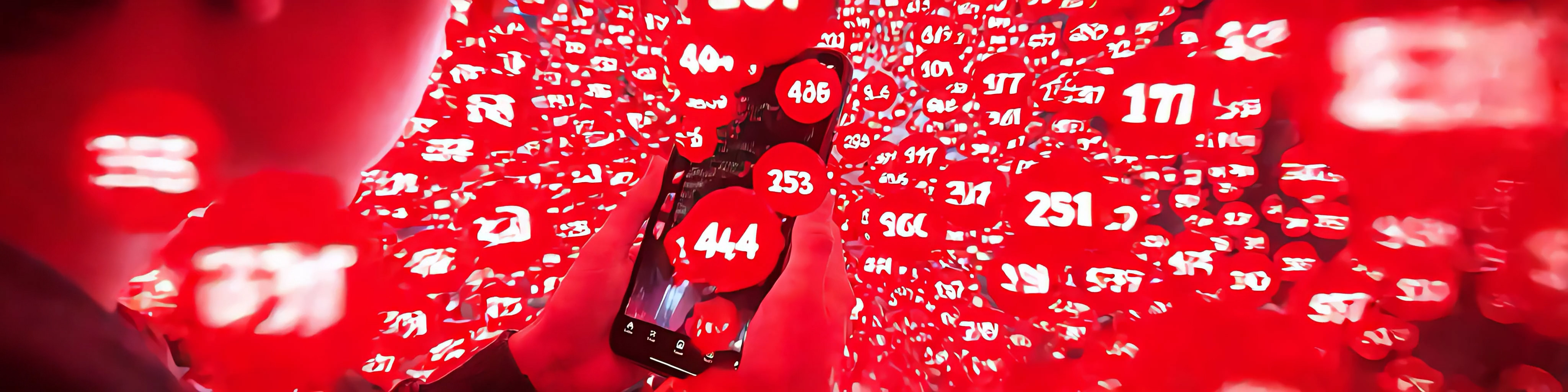
Green Day use punk as a mass-media weapon. The rebellion is no longer only in the club or on the street; it moves through television, propaganda, rock opera, and the spectacular language of the very system it is attacking.
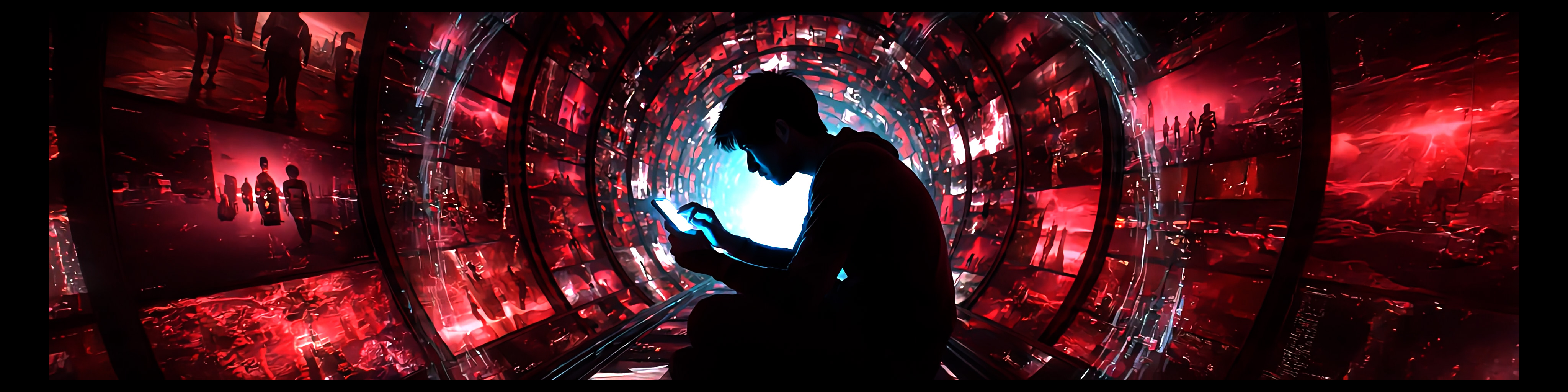
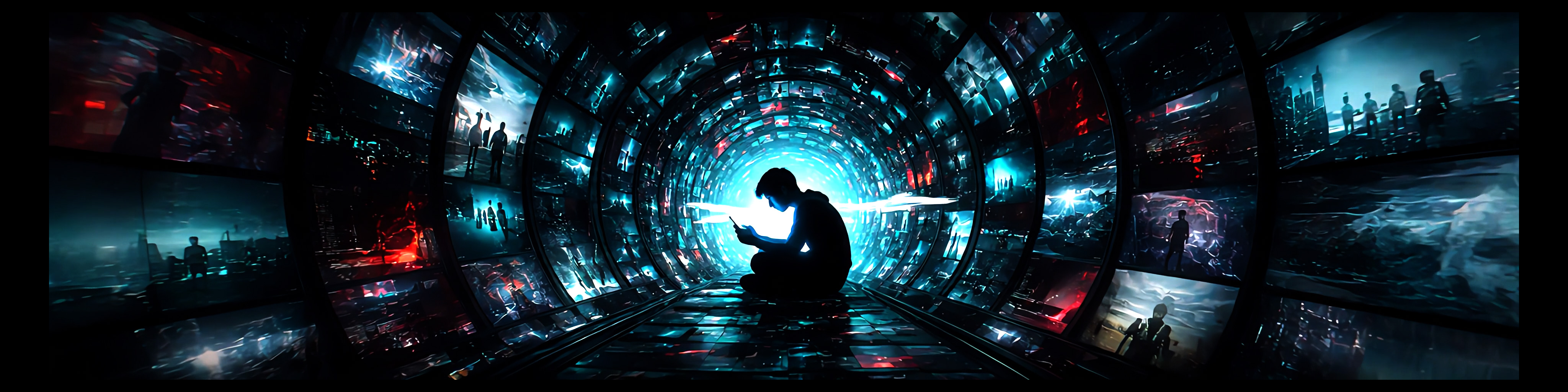
A single young person sits inside a circular tunnel of screens, bent over a phone. The old national television has become an object in the palm of the hand: closer, more intimate, harder to leave.
The new form of alienation is smaller and more private, but more total.
The final act begins with the eye of the boy looking at the phone.
The Castle becomes a glossy pop lens. Punk is now image before sound: stickers, mouths, eyes, palm trees, skateboard signs, bedroom graphics, MTV colors, and California surfaces.
The anger becomes logo, sticker, pose, and adolescent memory.
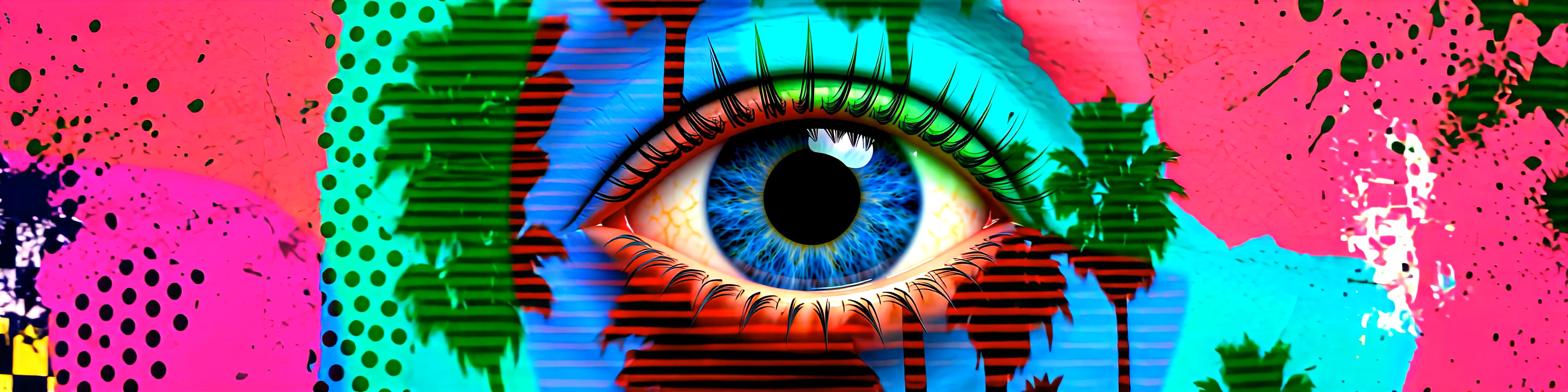
Blink-182 enter as the most adolescent and pop version of the story. Tom DeLonge, Mark Hoppus, and Travis Barker carry the Ramones' elementary structure into a radio-ready format: few chords, short run, immediate hook, bright production.
The discomfort is no longer shouted like in the previous chapters. It passes through irony, jokes, sentimental fragments, and melancholy disguised as speed.
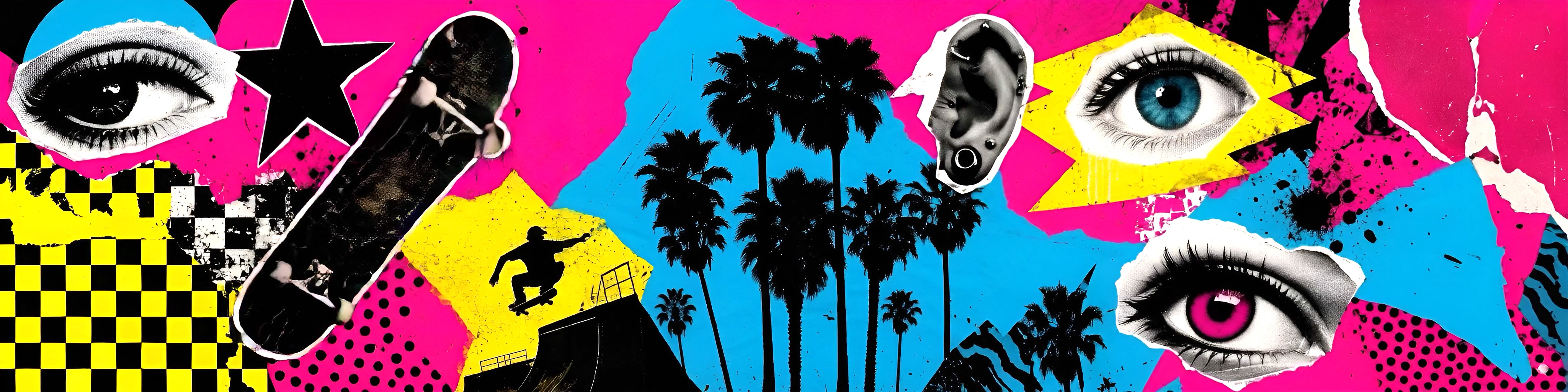
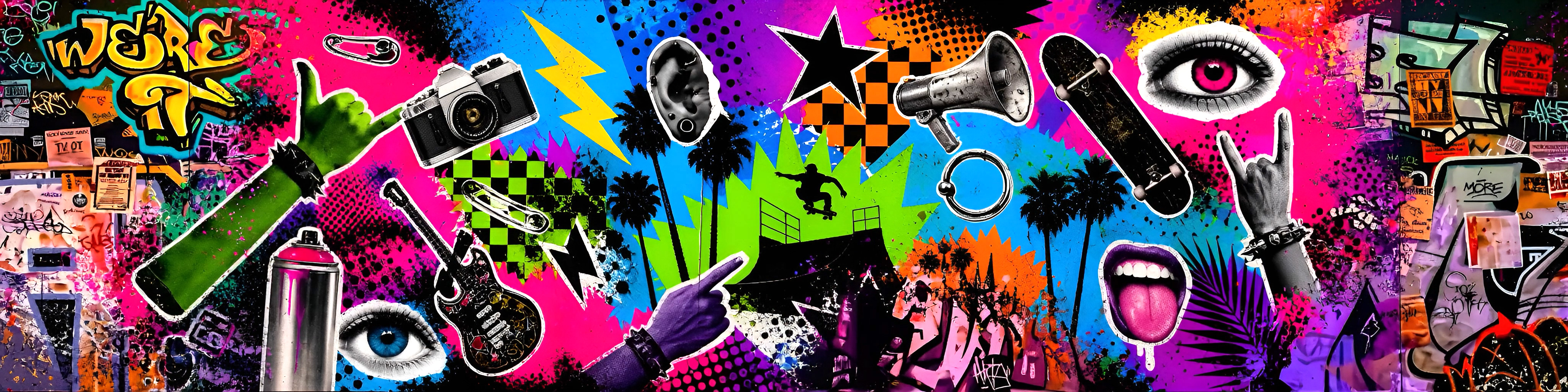
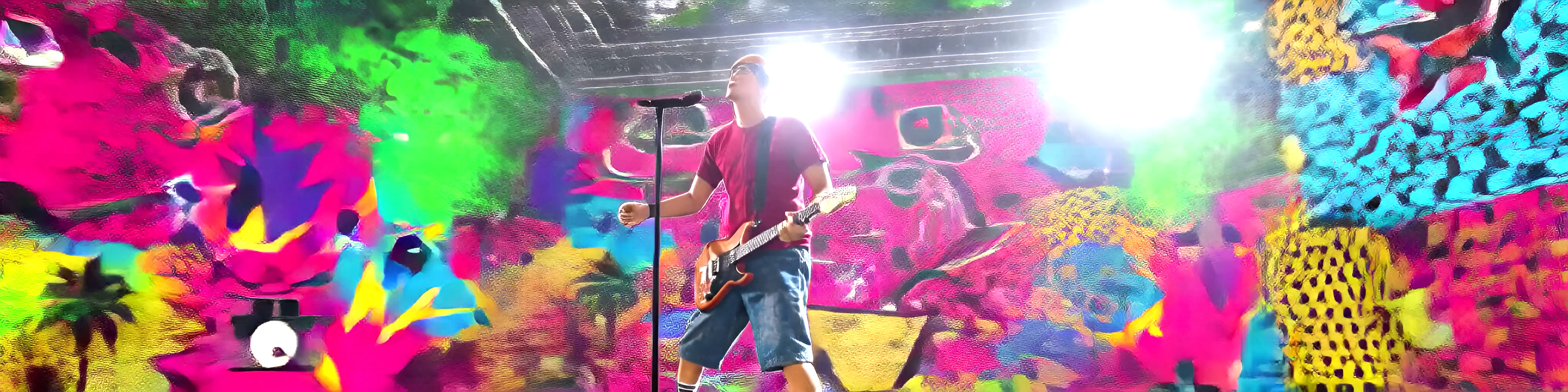
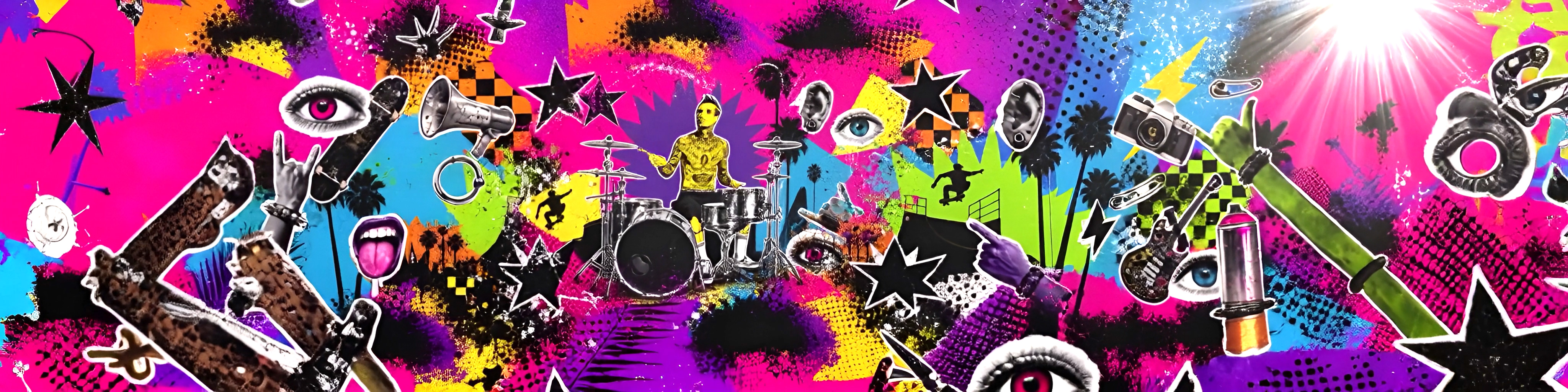
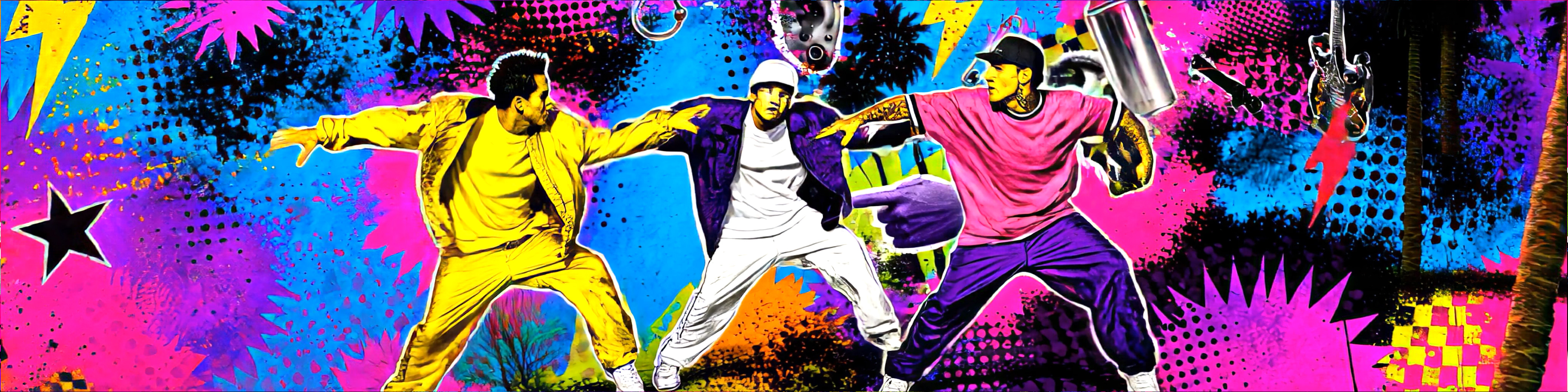
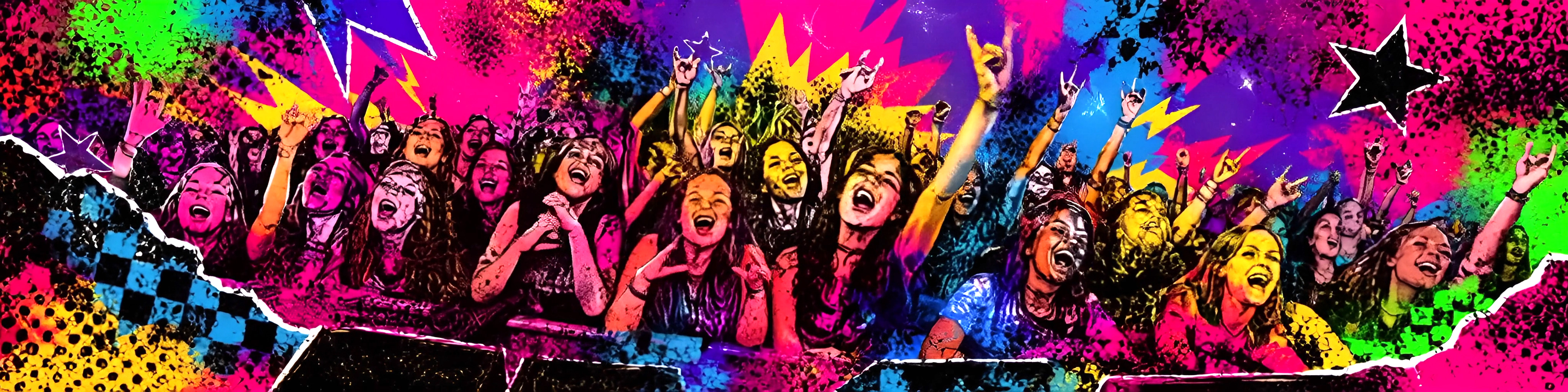
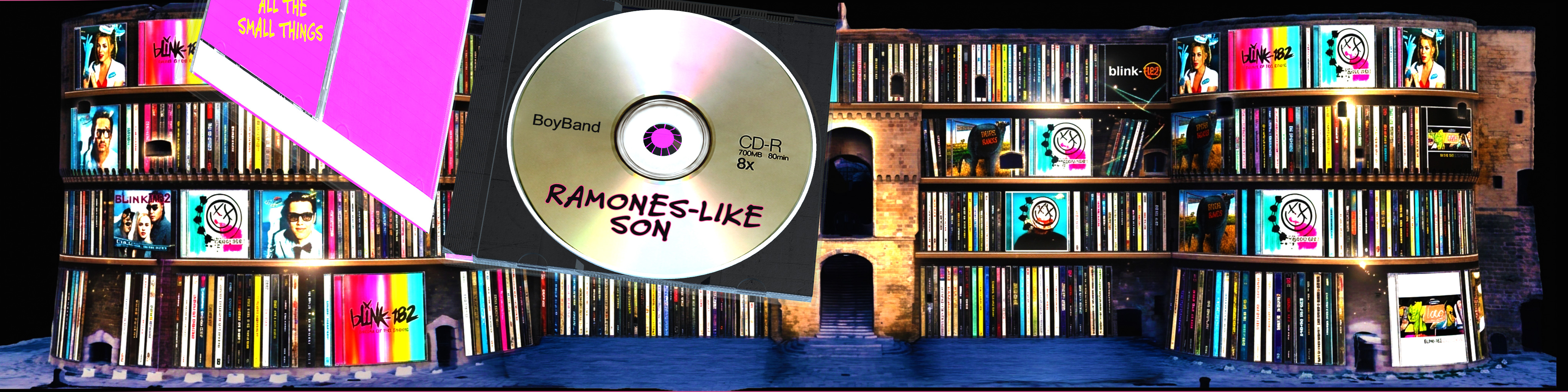
Then comes the short circuit: the band parodies the boy band machine, and the pop machine captures them through that parody.
The joke becomes success.
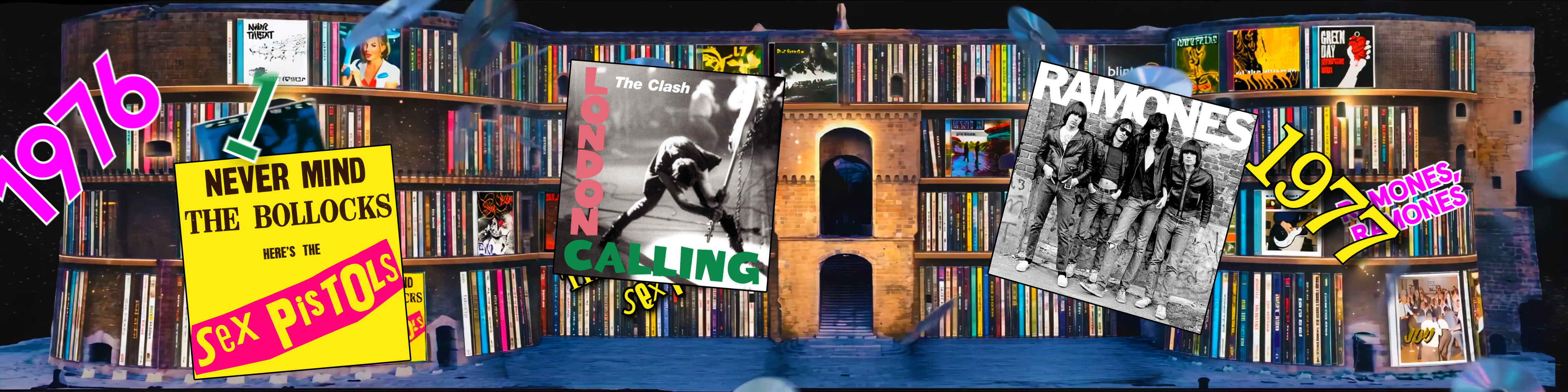
The Castle becomes a library of CDs. Punk is archived, stacked, sold, collected, and replayed. A CD-R appears with RAMONES-LIKE SONG written on it: the key to the final passage.
All The Small Things was built as a Ramones-like song. The circle closes. The original chant returns inside a worldwide pop hit.
The previous chapters reappear as records pulled from the shelf: Ramones, Sex Pistols, The Clash. The sentence PUNK IS DEAD appears like a wall judgment, then is corrected and reversed into PUNK NOT DEAD.
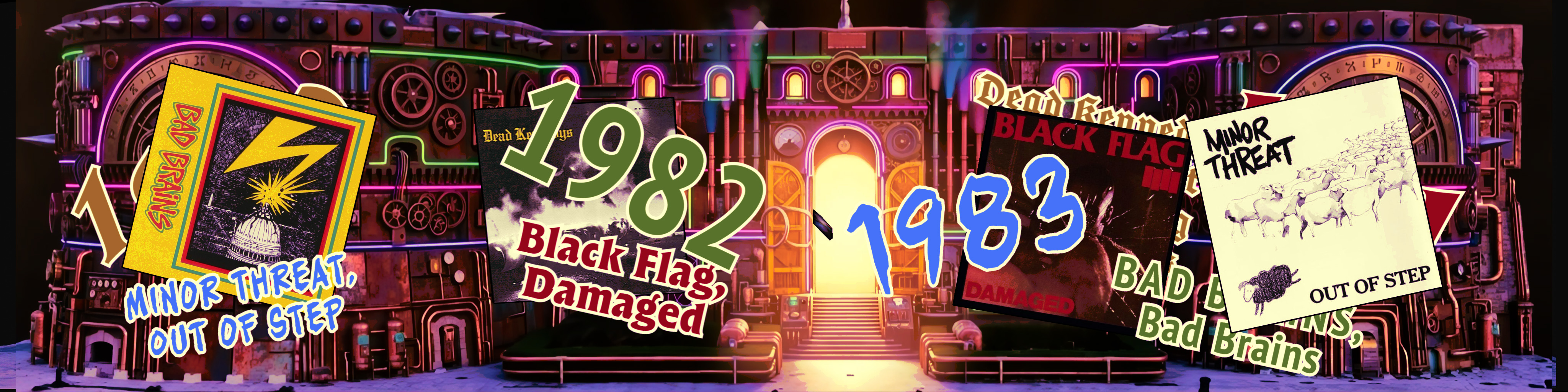
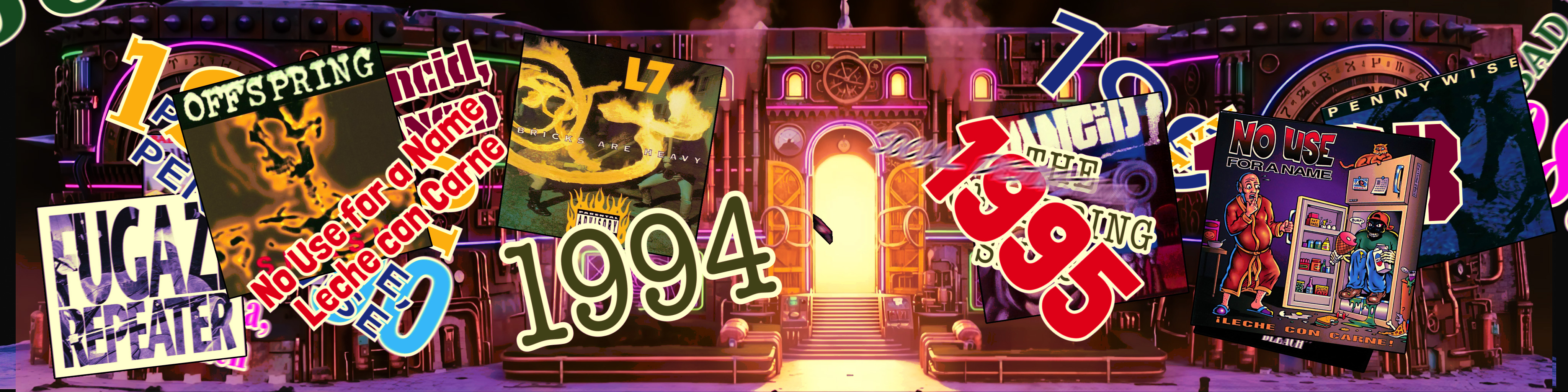
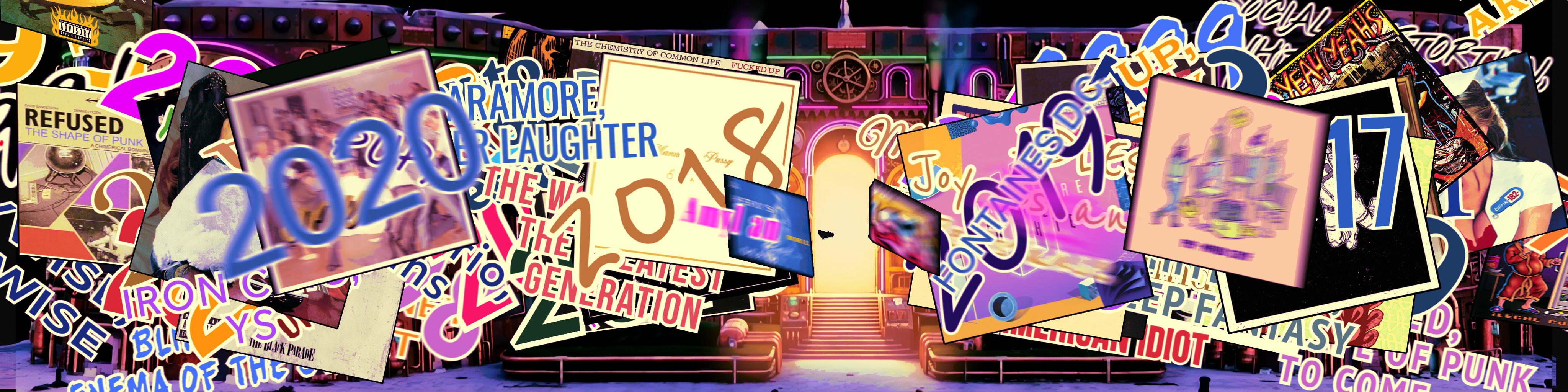
The fifty-year timeline runs across the facade: dates, records, names, symbols, generations. From 1976 to global pop-punk, rebellion becomes a shared language.
It is no longer locked inside a club, a street, or a single scene. It moves through festivals, videos, t-shirts, graphics, bedrooms, platforms, and collective memory.
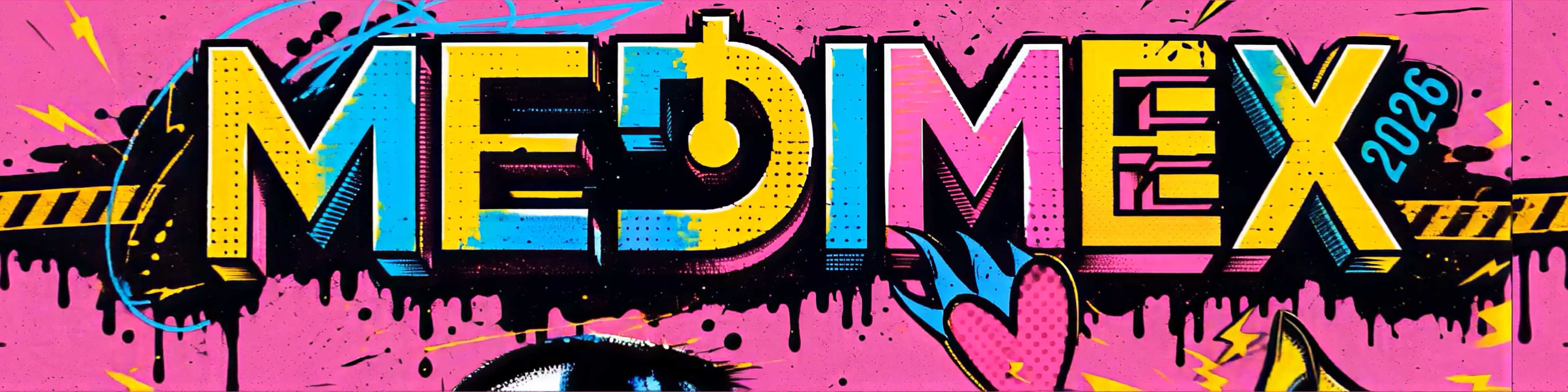
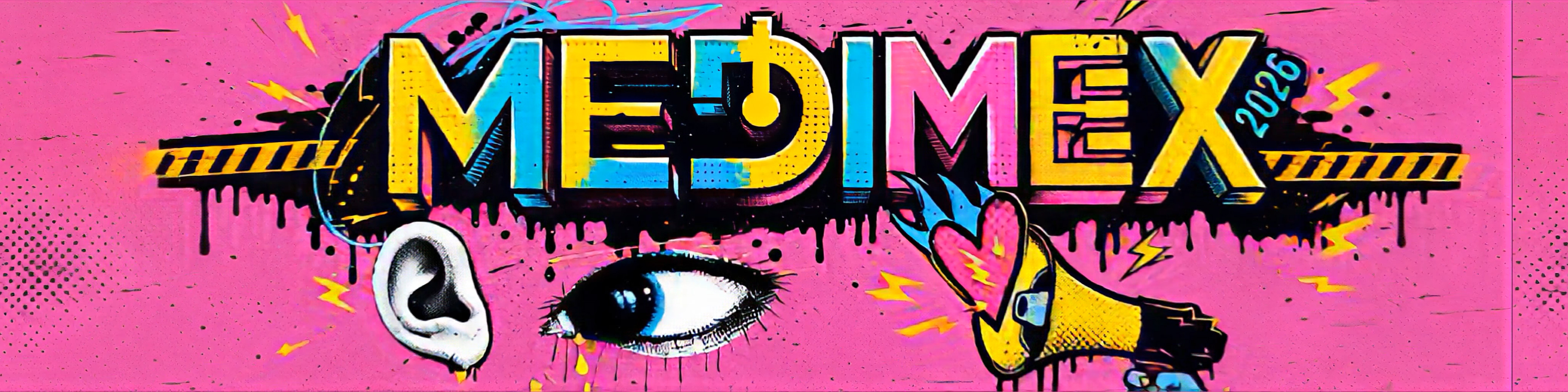
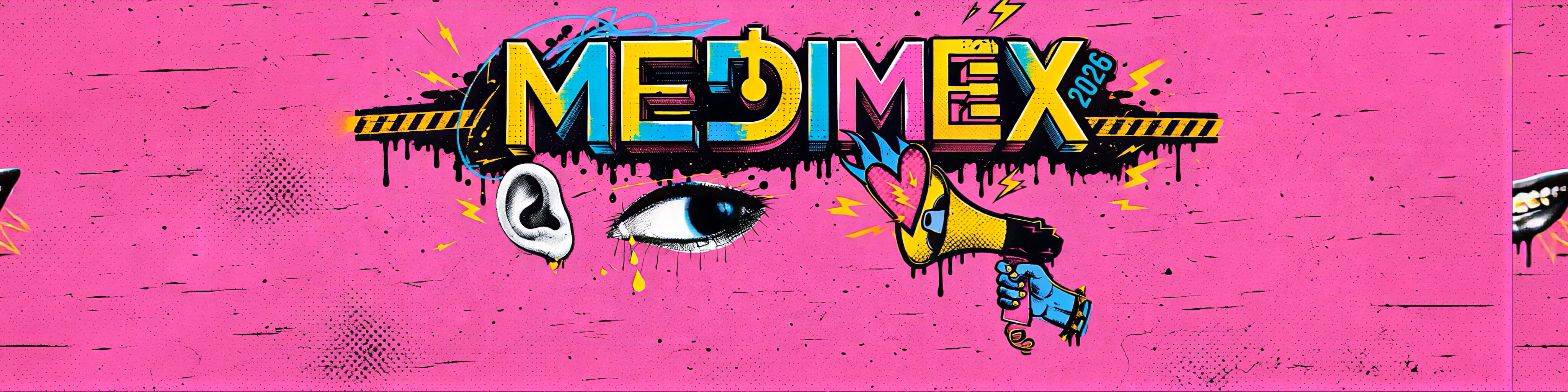
At the end, the MEDIMEX logo is built letter by letter with the official palette and graphic elements of the event. The journey that began at CBGB reaches Taranto.
Punk has become pop, but under the plastic surface something still vibrates.
To extend the project beyond the live show, we created medimex.blendingpixels.com, a dedicated website celebrating Blending Pixels' contribution to Medimex and the third consecutive edition of the Projection Mapping Show curated by Roberto Santoro and produced by Blending Pixels.
The website brings the Aragonese Castle into a digital space through a 3D twin of the monument, where the projection mapping work can be explored as an interactive experience. It is a way to keep the Castle, the visuals, and the Medimex editions connected after the projectors turn off.
Visitors can revisit the Medimex projection mapping journey and generate their own visuals inspired by the festival's message of peace and togetherness, turning the website into a small participatory extension of the show.
Hey Ho! Let's Go!
a Projected AR Experience by
Original Work
Roberto Santoro and Blending Pixels
Creative Direction - AI Research and Development
Roberto Santoro
With the support of
Marcello Reina
Francesca Cianniello
Sara Bargiacchi
Vincenzo Marzullo
Donato Guarino
Eugenio Laddago
Pasquale Potenza
Technical Director
Pino Loconsole
Playout Supervisor
Tommaso Todisco
Audio - Video Projection
Luci di Scena
Medimex Artistic Director
Cesare Veronico
Medimex Communication Manager
Paola Troia
Radio Medimex
Corrado Minervini
Ramones
Blitzkrieg Bop
Sex Pistols
God Save the Queen
The Clash
Should I Stay or Should I Go
Green Day
American Idiot
Blink-182
All The Small Things
President
Paolo Ponzio
Vice president
Marco Giannotta
Board members
Maddalena Tulanti
Viviana Peloso
Salvatore Maria Sangiorgi
Director
Sante Levante
Manager responsible for regional projects
Claudia Sergio
Puglia Sounds and Medimex Artistic Coordinator
Cesare Veronico
Artistic Direction
Stefano Senardi
Giorgio Riccitelli
Organization and general production
Ella Gaeta
Organization and production
Rino Binetti
Coordination of professional activities
Maddalena Ciocca
Coordination meetings with the artists
Antonella Dipierro
Coordination of Medimex Music Factory and Musicarium activities
Alessandra Bisconti
International relations
Cristina Fina
General secretary
Gabriella Morisco
Responsible for Regional Project Communication
Paola Troia
Press office
Luciano Rutigliano
Social Media
Serena Manieri
Graphics
Tommaso Armenise
Support for communication activities and web
Nicola Quacquarelli
Support for communication activities (UNIBA apprenticeship)
Francesco Bombini
Accommodation
Antonio Tuzza
Logistics
Lello Petrone
Ferdinando Cocco
Administration and accounting
Elvira Nardone
Marta Francioso
Francesco Fiore
Marianna Capotorto
Maria Fornarelli
Ciro Rutigliano
Pino Santoro
Sante Livrano
Secretariat
Fabrizio Visconti
Rosangela Coroneo